
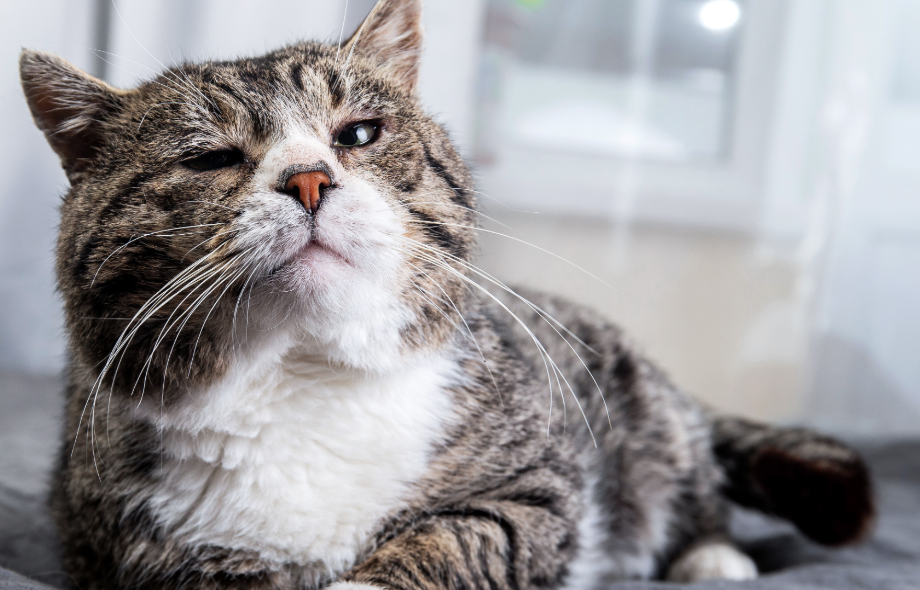
Many cats struggle with muscle or joint pain as they age, but because cats instinctively hide discomfort, caregivers don’t always spot the early signs. Conditions such as osteoarthritis (OA) can drastically affect mobility, mood, grooming, and behaviour — yet with the right care, affected cats can still enjoy an excellent quality of life.
Why older cats are at risk
Osteoarthritis is extremely common:
- Around 60% of cats over 6 years old show signs
- Up to 90% of cats over 12 are affected
OA causes progressive damage to joints – especially the elbows, knees, hips and spine. It may develop from age-related “wear and tear”, previous injuries, or underlying joint issues. Other causes of mobility problems include neurological conditions, limb loss, and cognitive decline in senior cats.
Signs your cat may be in pain
Cats rarely cry out when they’re hurting. Instead, they show subtle changes in routine and behaviour. These can show up in a number of ways:
Reduced mobility
- Hesitation or difficulty jumping
- Stiffness after rest
- Limping
- Struggling with stairs or cat flaps
- Toileting accidents or difficulty using the litter tray
Reduced activity
- Sleeping more than usual
- Resting in easier-to-reach locations
- Less interest in exploring or going outdoors
- Less play or interaction
Grooming changes
- Matted, dull coat
- Overgrooming painful joints
- Overgrown nails
Behaviour changes
- Irritability
- Avoiding touch
- Withdrawing from family or other pets
Other signs
- Eating less
- Struggling to reach bowls
- Resting hunched rather than curled up
What you can do
If you notice any of these signs, speak with a vet. Early recognition leads to better pain control and a happier, more comfortable cat.