

Longer walks, swimming, holidays and days spent exploring the countryside are some of the best parts of summer with a dog. However, the warmer months can also bring an increase in ear problems.
A dog who suddenly starts shaking their head, scratching at an ear or producing an unusual smell may have more than a little water trapped after a swim. These signs can indicate inflammation, infection, allergy or even a grass seed lodged inside the ear canal.
Ear problems can become painful quickly, so it is important to know what to look for and when your dog needs veterinary attention.
Why do dogs develop ear problems?
The part of the ear most commonly affected is the external ear canal. Inflammation here is known as otitis externa.
A dog’s ear canal is shaped rather like an “L”, with a vertical section followed by a deeper horizontal section. This shape can make it harder for moisture, wax and debris to escape than it would be from a human ear.
Otitis externa is not simply one type of infection. It is a condition that can develop through a combination of:
- an underlying trigger, such as allergy, parasites or a foreign body
- factors that make the ear more vulnerable, such as narrow canals, heavy ear flaps or frequent swimming
- secondary overgrowth of bacteria or yeasts
- ongoing changes that prevent the ear from returning to normal
Allergic skin disease is one of the most important underlying causes of recurring ear inflammation in dogs. Research also shows that bacterial and yeast overgrowth are often secondary to changes within an already inflamed ear, rather than being the original cause of the problem.
This is why repeatedly treating what looks like an “ear infection” without investigating the underlying cause may only provide temporary relief.
Why can ear trouble be more common in summer?
Swimming and bathing
Moisture left inside the ear can alter the environment of the ear canal and may contribute to irritation or microbial overgrowth, particularly in dogs already prone to ear disease.
Swimming does not automatically cause an infection, and many dogs swim regularly without developing problems. However, dogs with allergies, previous otitis, narrow ear canals or ears that retain moisture may be more vulnerable.
Seasonal allergies
Environmental allergies can flare when pollen and other allergens are more abundant. In some dogs, recurring ear inflammation may be one of the first or most obvious signs of allergic skin disease.
A dog with allergy-related ear disease may also lick or chew their paws, rub their face, develop itchy skin or have repeated skin and ear infections. Ear flare-ups that happen at a similar time each year are especially worth discussing with your vet.
Grass seeds
Grass seeds can become trapped in the coat, paws, nose, eyes and ears. Their pointed shape allows them to work forwards into tissue rather than falling out easily.
A grass seed in the ear may cause very sudden, vigorous head shaking, scratching or pain, often after a walk through long grass. It may sit deep in the ear canal where it cannot be seen from the outside.
A grass seed will not dissolve or be cured by ear drops. It usually needs to be located and removed by a vet, sometimes with sedation.
Heat and humidity
Warm, humid conditions may make the ear canal a more favourable environment for yeasts and bacteria when inflammation, trapped moisture or excessive wax is already present.
However, the presence of bacteria or yeast does not necessarily tell us why the problem began. An examination and ear cytology, where a sample of material is assessed under a microscope, can help a vet identify what is present and select appropriate treatment.
Signs your dog may have an ear problem
Look out for:
- repeated head shaking
- scratching at one or both ears
- rubbing the side of the head along furniture or the floor
- redness at the entrance to the ear
- increased wax or discharge
- an unpleasant, sweet or musty smell
- sensitivity when the ear or head is touched
- holding one ear differently
- crying or pulling away when scratching
- swelling of the ear flap
- seeming quieter, unsettled or reluctant to eat because of pain
Dogs can be very stoical. Some will show little more than an occasional head shake, while others become extremely distressed.
Does smelly ear wax always mean an infection?
Not necessarily, but a new or unpleasant smell should not be ignored.
Healthy ears should not usually produce a strong odour. Smell can be associated with yeast or bacterial overgrowth, but appearance and smell alone cannot reliably identify which organisms are involved or which treatment is suitable.
Different ear diseases require different approaches. Treatment may involve managing inflammation, cleaning the ear, treating yeast or bacteria, removing a foreign body, controlling parasites or investigating an underlying allergy.
Using the wrong product may delay appropriate care. It can also cause irritation, and some ear preparations may be unsafe if the eardrum is damaged.
Why old ear drops are not a good idea
It may be tempting to use drops left over from a previous episode, particularly when the symptoms look familiar. However, the cause may be different this time.
For example:
- the ear may contain yeast rather than bacteria
- a different type of bacteria may be present
- there may be a grass seed or another foreign body
- the ear canal may be severely inflamed or narrowed
- the eardrum may be damaged
- the previous medication may be out of date or contaminated
Unnecessary or poorly targeted antimicrobial treatment can also contribute to antimicrobial resistance. Veterinary guidance increasingly emphasises examining the ear, using cytology and targeting treatment rather than routinely relying on antibiotics.
When does your dog need urgent veterinary help?
Arrange prompt veterinary assessment if your dog has:
- sudden, violent head shaking after walking in long grass
- significant pain or will not let you touch the ear
- blood, pus or a large amount of discharge
- a swollen ear flap
- a head tilt
- loss of balance, circling or falling
- unusual eye movements
- vomiting alongside balance problems
- facial drooping or difficulty blinking
- symptoms following an injury
- severe lethargy or distress
A head tilt, balance changes or abnormal eye movements may suggest that inflammation has affected deeper parts of the ear. These signs require timely veterinary assessment.
A swollen ear flap may be an aural haematoma, where repeated shaking causes bleeding between the tissues of the pinna. This is painful and usually needs veterinary treatment.
What can you do at home?
Until you have veterinary advice:
- stop your dog swimming
- prevent them from scratching if possible
- keep the outside of the ear dry
- avoid inserting cotton buds, fingers or instruments into the canal
- do not pour water, oil, vinegar, peroxide or household remedies into the ear
- do not use leftover ear medication
- do not attempt to remove a deeply lodged grass seed yourself
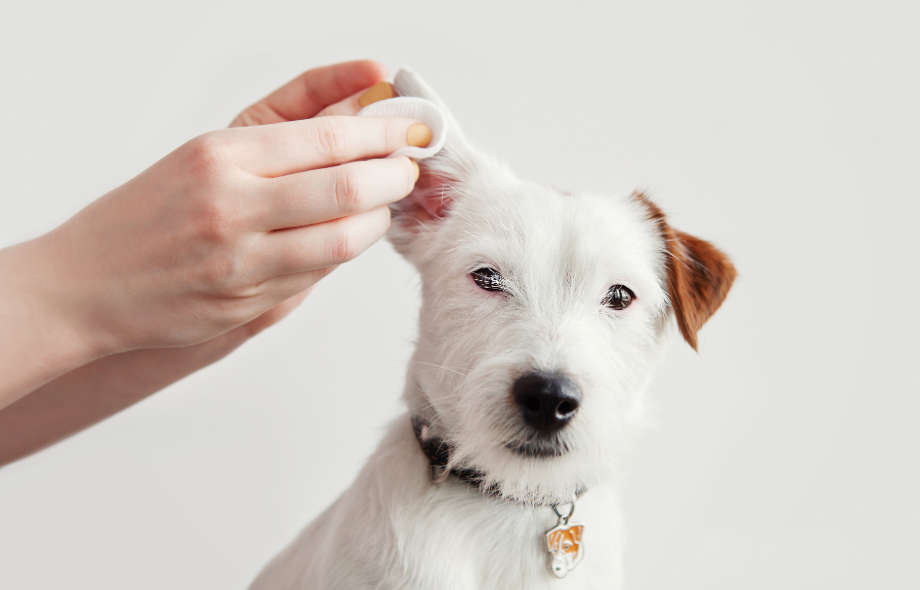
You can gently wipe visible discharge from the outside of the ear flap with clean, damp cotton wool, but avoid pushing anything down the canal.
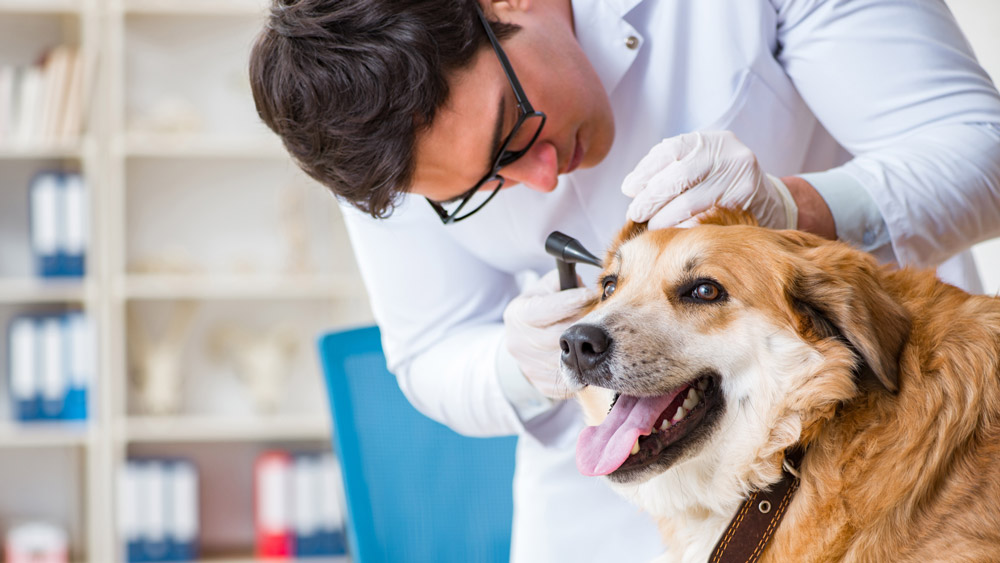
An online veterinary consultation can be useful for assessing your dog’s symptoms and helping you decide how quickly they need to be seen. However, a painful ear usually requires an in-person examination using an otoscope, and often cytology, before treatment is chosen.
Download the PawSquad app today for 24/7 online vet access. An online vet can assess your dog’s symptoms and help decide on your next steps.
Can ear problems be prevented?
Not every episode can be prevented, particularly when allergy or ear anatomy plays a role. However, some practical steps may reduce the risk.
Check ears regularly
Look at your dog’s ears when they are healthy so you know what is normal for them. Check for redness, wax, smell or discomfort, especially after swimming or walking through long grass.
Check after countryside walks
Look around the ear opening, paws, armpits and coat for grass seeds. Do not probe into the ear canal.
Dry the ears after swimming
Gently dry the ear flaps and the visible entrance to the canal. Do not insert towels or cotton buds deeply into the ear.
Dogs with repeated swimming-related problems may benefit from a vet-approved ear-care plan. Ear cleaners are not suitable for every dog, particularly if the ear is painful or the eardrum may be damaged, so ask your vet which product and frequency are appropriate.
Manage underlying allergies
Recurring ear trouble should prompt a conversation about possible allergic skin disease. Controlling the underlying inflammation can be more effective than repeatedly treating secondary flare-ups.
Attend recommended rechecks
An ear can look better from the outside while inflammation or microorganisms remain deeper in the canal. Rechecks help confirm that treatment has worked and reduce the risk of the problem returning.
The earlier ear disease is addressed, the better
Mild ear inflammation can progress into severe pain, infection and narrowing of the ear canal. Repeated or poorly controlled episodes may lead to permanent changes that make future problems harder to treat.
If your dog is shaking their head, scratching, producing smelly discharge or showing signs of pain, veterinary advice can help establish whether the cause is allergy, moisture, yeast, bacteria, parasites, a grass seed or something else.
With the right diagnosis and an appropriate treatment plan, most dogs feel much more comfortable quickly.