
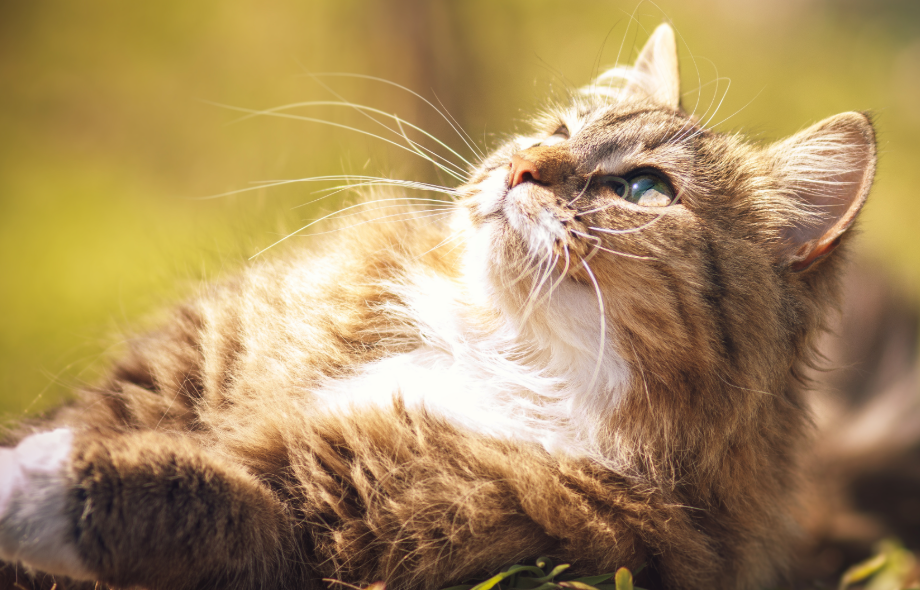
Most of us wear sunscreen on hot sunny days, but did you know your cat might need some too?
Repeated sunburn in cats can lead to a painful condition called solar dermatitis. In some cases, this can progress into a type of skin cancer called squamous cell carcinoma. Protecting your cat with pet-safe sunblock on sunny days is the best way to prevent these painful skin problems from ever developing.
Can cats really get sunburnt?
Yes, they can. In areas where their fur is thin or non-existent – such as the ears, eyelids, and the bridge of the nose – the sun can be just as damaging to feline skin as it is to ours. Some cats are much more at risk than others:
- White cats: They lack the protective pigment (melanin) that darker cats have.
- Hairless breeds: Such as the Sphynx.
- Cats with thinning hair: Older cats or those with medical conditions often have thinner fur on their ears and nose.
Solar Dermatitis: The Warning Sign
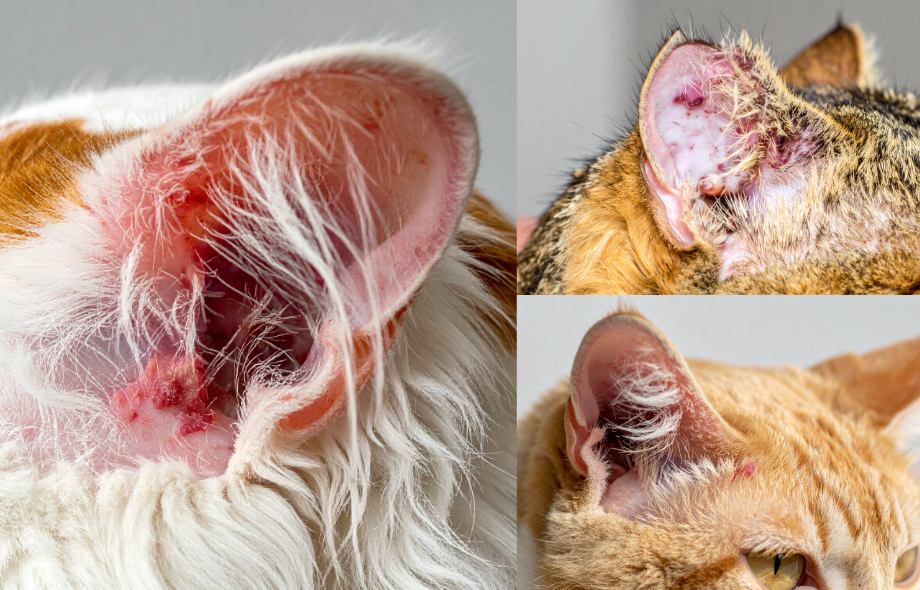
When a cat’s skin is repeatedly damaged by the sun’s ultraviolet (UV) rays, it can cause a condition called solar dermatitis. Think of this as a “warning phase” before cancer develops.
Signs to look out for:
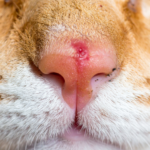
- Early signs: The affected skin may look pink and scaly, often with some hair loss.
- Worsening signs: As the damage continues, the area becomes crusty and ulcerated (sore).
- Signs of irritation: These lesions are often itchy or painful. You might notice your cat shaking its head or scratching at its ears, which can cause bleeding from the ear tips.
Progression to Skin Cancer (Squamous Cell Carcinoma)
It is vital to monitor solar dermatitis closely because it can progress into a type of skin cancer called Squamous Cell Carcinoma. Once it becomes cancerous, the “scabs” will not heal and the ear tips may begin to change shape or look “eaten away”.
Diagnosis
If your vet is concerned that the skin damage is becoming cancerous, they will suggest a biopsy. This involves taking a small sample of the affected skin to look at under a microscope. This is the only way to confirm if cancer cells are present and helps the vet decide on the best treatment.
Treatment: What happens next?
The treatment your vet chooses depends on whether the skin is just damaged (dermatitis) or if it has turned into cancer.
Managing Solar Dermatitis (The Early Stage)
If your cat has developed solar dermatitis, the goal is to reduce inflammation and stop further sun damage:
- Sunblock: You’ll need to apply a pet-safe sunblock to your cat every day. Cover the affected areas and any other vulnerable skin (such as the nose, eyelids, or underbelly). Avoid human sun lotions, as they often contain ingredients toxic to pets.
- Creams & Antibiotics: Your vet may prescribe steroid creams to reduce swelling or antibiotics if the skin has become infected.
- Sun Avoidance: Ideally, keep your cat indoors during peak UV hours (10am–4pm). However, this may not be possible if being confined causes your cat significant stress.
Treating Skin Cancer (The Advanced Stage)
If your cat has developed SCC, the affected area must be removed to stop the cancer from worsening or spreading. Depending on the location, your vet may suggest:
- Surgery: This is the most common treatment for SCC on the ears. The procedure to remove the affected ear tips is called a ‘pinnectomy’. While it changes the cat’s appearance, they usually heal quickly and adapt well to having “rounded” ears. The surgery does not affect their hearing.
- Cryotherapy: This involves using liquid nitrogen to “freeze” off small cancerous lesions. This is a common choice for sensitive spots like the nose or eyelids where surgery might be difficult.
- Radiation: In some cases, or if the cancer is in an area that cannot be operated on, specialist vets may use radiation to target and kill the cancer cells.
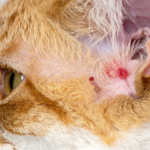
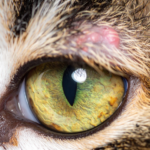
Outlook: What is the long-term prognosis?
Recovery and the long-term outlook depend heavily on the location of the tumour and how quickly it is addressed:
- Ear Tumours: Cats with ear tip tumours tend to make a full recovery if treated promptly, as these areas are relatively easy to remove surgically.
- Complex Areas: Tumours on the eyelids and nose can be more difficult to treat, especially if they have spread deep into the surrounding tissues.
- Slow Spread: Fortunately, SCC is generally slow to spread to other parts of the body. This provides a good window of opportunity for successful treatment if the cancer is caught early.
- Future Vigilance: It is important to keep a close watch for any new lesions developing and ensure all vulnerable skin is protected from the sun going forward.
How to protect your cat
Prevention is always better than cure! You can keep your cat safe by following these simple steps:
- Use Pet-Safe Sunblock (Factor 50): On sunny days, apply sunblock to your cat’s ear tips, nose, and any vulnerable skin.
⚠️ WARNING:
Never use human sunscreen, as many contain ingredients that are toxic to cats.
- Keep them inside: Limit outdoor time during the hottest part of the day (10am–4pm).
- UV Window Film: If your cat regularly sunbathes in sunny spots around the house, consider adding a UV-blocking film to your windows.
When to contact your vet
Book an appointment if you notice any new lumps, pink scaly patches, or scabs that won’t heal – especially on white cats. Early treatment makes a huge difference in keeping your cat happy and healthy.