

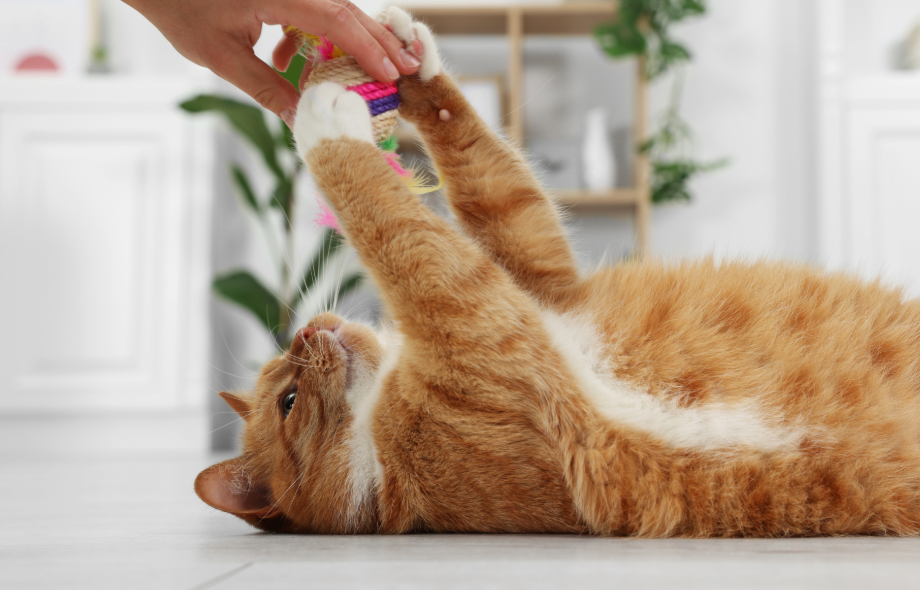
Why gentle movement matters for older cats
As cats move into their senior years, changes such as arthritis, stiffness, decreased muscle mass, and reduced energy levels become more common. Even so, movement remains essential for their comfort and wellbeing.
For older or unwell cats:
- Gentle activity supports joint flexibility and reduces stiffness.
- Light exercise helps maintain muscle strength, which supports weak joints.
- Indoor stimulation reduces boredom, anxiety and stress, and nighttime restlessness.
- Slow, predictable activity can improve overall quality of life, even for cats approaching the end of life.
The goal isn’t to tire them out — it’s to keep them feeling comfortable, confident, and engaged.
Encouraging safe, comfortable play
Senior cats or cats with mobility problems often prefer short, calm interactions rather than energetic play. Aim for 2–3 short sessions a day, even if each lasts only a few minutes.
When playing with older or arthritic cats:
- Avoid sharp turns or sudden movements that can strain stiff joints.
- Discourage jumping from beds, sofas, or windowsills — provide sturdy, non-slip steps or ramps instead.
- Choose soft, non-slip flooring to help prevent slips.
- Follow your cat’s signals — if they walk away or lose interest, that’s enough for now.
- Try play at their most comfortable times — this may be late morning or early evening for many older cats.
For cats nearing the end of their life, play may be extremely gentle — stroking a wand toy across the floor or offering a soft toy to nuzzle may be enough.
Outdoor access: choose calm, safe exploration
If your cat enjoys the outdoors and it’s safe, you can still offer controlled access:
- Catios or enclosed runs allow exploration without the need to jump or climb.
- Harness or lead training may suit confident older cats who still enjoy fresh air.
- Keep outings short and calm, avoiding slippery patios, steep steps, or cold weather, which can worsen stiffness.
If outdoor access becomes too difficult, move their favourite indoor resting spots closer to natural light or windows so they can still watch the world go by.
Indoor enrichment ideas for senior or mobility-limited cats
Keeping things interesting doesn’t need to be physical – mental enrichment is just as important for older cats.
Try:
- Gentle chasing games with slow-moving feather wands or toys dragged along the floor.
- Soft toys for batting — lightweight toys are easier on sore joints.
- Puzzle feeders that require minimal movement but offer mental stimulation.
- Raised or low platforms depending on mobility — steps or ramps can help them reach favourite spots safely.
- Cardboard boxes or soft dens that provide warmth and security.
- Horizontal scratching mats, which are easier for sore joints than tall vertical posts.
Avoid laser pointers for senior cats — they can become frustrated or confused as it becomes harder to “catch” the target.
Special considerations for end-of-life or very frail cats
As cats approach the end of life, their energy levels drop and comfort becomes the priority.
Focus on:
- Low-effort, predictable interactions they can choose to join or ignore.
- Soft bedding in warm, quiet areas.
- Reducing physical challenges — keep essentials on one level of the home.
- Offering comforting routines, such as gentle grooming or slow petting if they enjoy it.
- Maintaining dignity by ensuring easy access to litter trays, food, and water without strain.
If movement becomes painful or they spend long periods resting, speak to a vet — pain relief can transform comfort in ageing or terminally ill cats.
When to ask your vet for advice
If your older cat:
- Hesitates to jump
- Struggles with the litter tray
- Seems stiff after resting
- Is less interested in play or social interaction
- Has lost weight or muscle
- Becomes withdrawn or restless at night
…it may be time to adjust their pain management or support plan.
Your vet can advise on:
- Pain relief
- Supplements
- Mobility aids
- Physiotherapy or acupuncture options
- End-of-life comfort care
In summary
Keeping older cats gently active supports both their physical comfort and emotional wellbeing. With slow, predictable play, thoughtful home adaptations, and lots of choice and control, senior cats – even those with arthritis or nearing the end of life – can enjoy a calmer, more comfortable daily routine.
A little goes a long way. Small changes can make a big difference. If you need advice about caring for your senior cat, speak to us any time.