
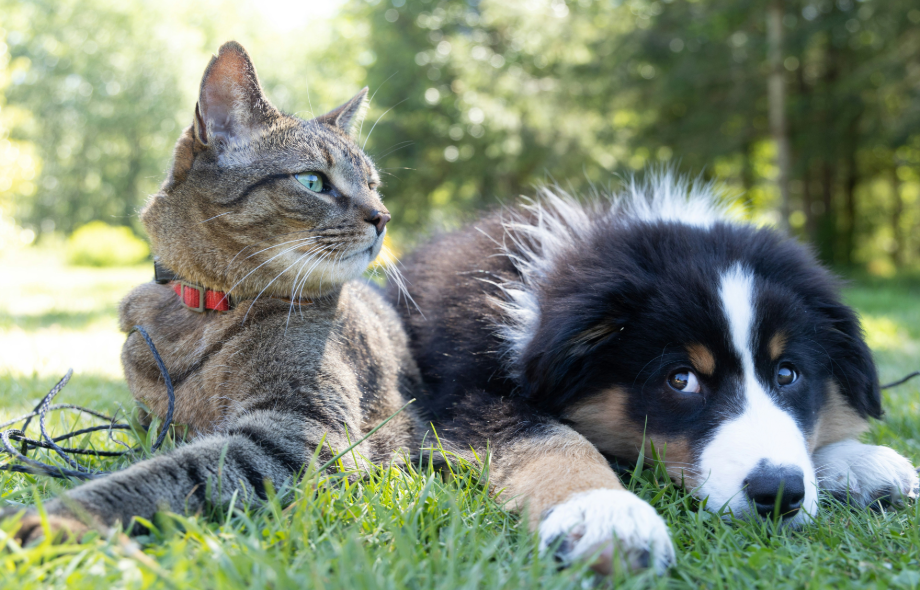
When we think about whether a pet is a healthy weight, the bathroom scales can seem like the obvious place to start.
But a number on the scales only tells us part of the story.
The healthy weight range for one Labrador could be quite different from that of another. The same applies to cats, particularly when you compare a small-framed cat with a much larger breed. Age, build, muscle, lifestyle and health all matter.
That is why vets don’t look at weight alone. We also look at body condition, which is a way of assessing how much fat a pet is carrying by looking at and feeling their body shape.
Learning how to do a simple body condition check at home can be a really useful way to notice gradual changes that are surprisingly easy to miss when you see your pet every day.
What is a body condition score?
Body condition scoring, often shortened to BCS, gives us a more useful picture of whether a pet is underweight, overweight or somewhere around their ideal.
One commonly used veterinary system scores pets from 1 to 9. On this scale, a score of around 4 or 5 out of 9 is generally considered ideal. Lower scores indicate that a pet is too lean, while higher scores mean they are carrying increasing amounts of excess body fat.
You may also come across body condition charts using a five-point scale, so don’t worry if the numbers look different. The principle is the same. We are looking at your pet’s overall shape and how easily certain areas of their body can be felt.
What should a healthy dog look and feel like?
Stand over your dog and look down at them. In a dog at a healthy body condition, you should usually be able to see a waist behind the ribs rather than the body continuing backwards in a straight line.
From the side, the tummy should tuck upwards towards the back legs.
Then use your hands. You should be able to feel the ribs without having to press through a thick layer of fat, but in an ideally conditioned dog they should not look dramatically prominent either. This combination of visible waist, abdominal tuck and ribs that are easy to feel is used in recognised canine body condition scoring systems.
Breed and body shape need to be taken into account. A lean sighthound won’t have the same outline as a stockier breed, which is another reason not to judge a dog’s health simply by comparing them with another dog in the park.
What about cats?
Cats can be surprisingly difficult to assess by eye, especially if they have a long or very fluffy coat.
Run your hands gently along your cat’s sides. You should be able to feel their ribs with a light covering of fat rather than having to press firmly to find them.
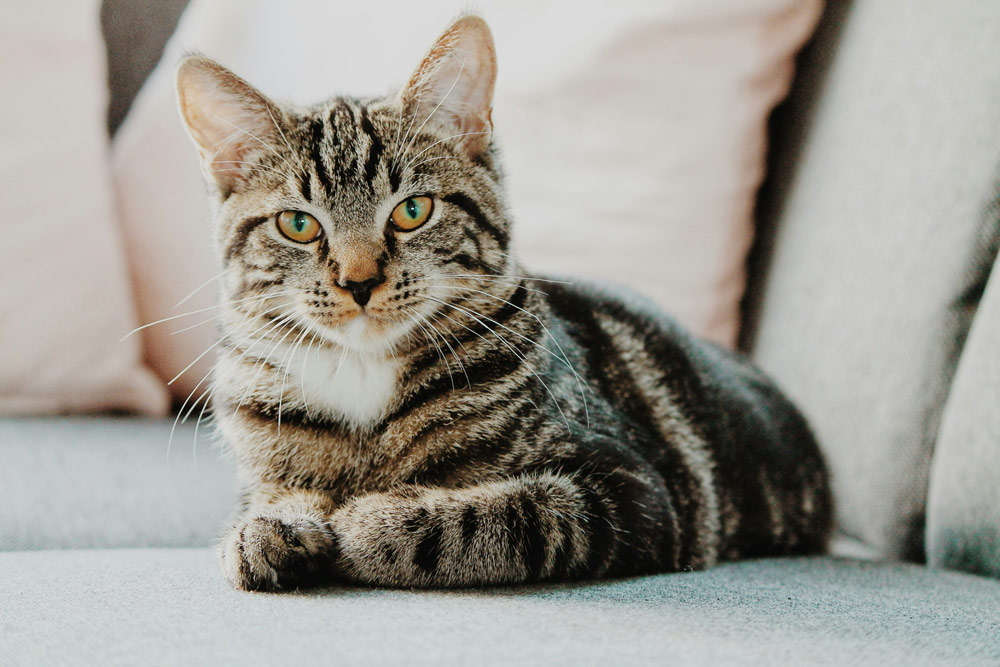
Viewed from above, an ideally conditioned cat should have a slight waist behind the ribs. There should not be large deposits of fat around the abdomen, although cats naturally have a loose fold of skin and tissue beneath the belly called the primordial pouch. Its presence alone does not mean a cat is overweight. The WSAVA scoring system assesses the ribs, waist and abdominal fat together rather than relying on just one feature.
It is worth getting into the habit of using your hands as well as your eyes. A thick coat can hide both weight gain and weight loss.
Why body condition can be more useful than weight alone
Imagine that your dog weighs 20 kg today and still weighs 20 kg six months from now. It sounds as though nothing has changed.
But if they have lost muscle and gained body fat, their health and physical condition may actually be quite different.
This becomes particularly important as pets get older. Veterinary nutritional assessment distinguishes between body condition, which largely looks at body fat, and muscle condition. A cat or dog can be overweight and still have significant muscle loss.
That is why keeping an eye on shape, strength and movement is useful alongside occasional weighing.
Healthy weight looks different through life
Your pet’s nutritional and activity needs will not stay the same from puppyhood or kittenhood through to their senior years.
Puppies and kittens
Growing animals need enough energy and nutrients to support development, but faster growth is not necessarily better growth.
Rather than trying to keep a puppy or kitten at a particular adult-looking shape, their growth and body condition should be monitored over time. Their food should also be appropriate for their age and stage of development.
If you are worried that a puppy or kitten is becoming too heavy, don’t simply put them on a restrictive diet designed for an adult animal. Speak to your veterinary team or a veterinary nutrition professional so their growth needs can be taken into account.
Adult pets
This is often when weight starts creeping on without anyone particularly noticing.
Portions may gradually become a little more generous. Treats get added without being counted as part of the day’s food. Activity changes after neutering, a house move or a change in the owner’s routine. A very active young dog becomes a slightly less active four-year-old, but the food bowl stays exactly the same.
Cats can be particularly good at making gradual weight gain difficult to spot.
Checking body condition every month or so can help you notice a changing waistline before the difference becomes substantial.
Older pets
It is easy to assume that older pets simply need less exercise and will naturally become heavier.
The reality is more complicated.
Staying active helps older dogs and cats maintain muscle strength and mobility, although the type and intensity of activity may need to change. Shorter, manageable walks can suit some senior dogs better than one very long outing, while regular play can help older cats continue moving in ways they enjoy.
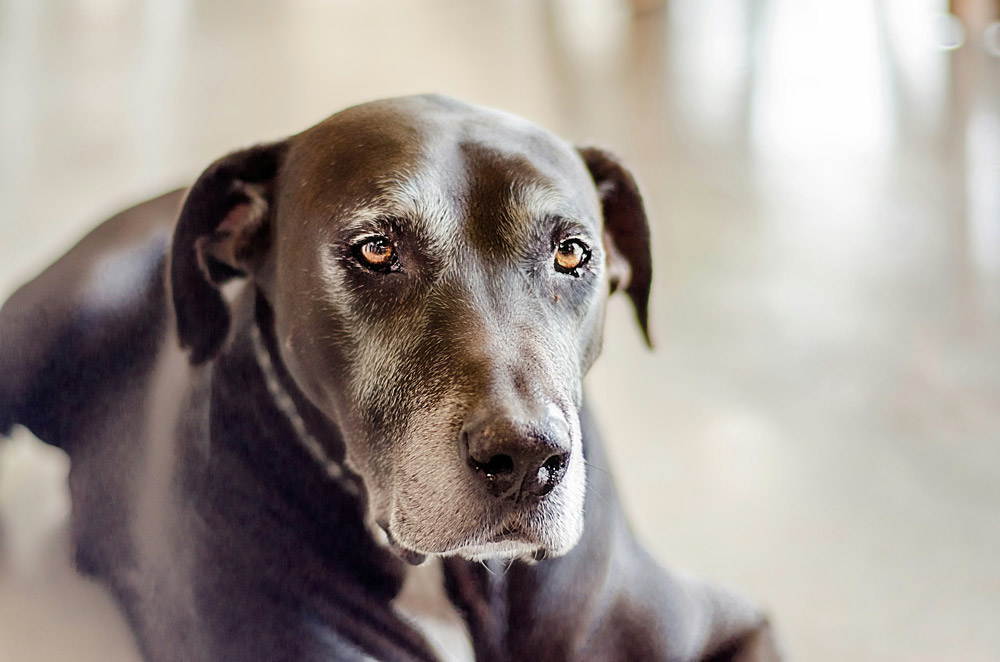
At the same time, unexplained weight loss should never simply be dismissed as old age. Weight loss can be associated with a range of health problems, so a pet who is becoming noticeably thinner without an obvious reason should be checked by a vet.
Movement is about more than burning calories
Exercise is important for weight management, but movement is also an important part of keeping the whole animal healthy.
For dogs, a walk offers physical exercise, but sniffing, exploring and interacting with their surroundings are valuable too.
Not every dog needs to cover huge distances. Age, breed, fitness, joint health and personality all influence what appropriate exercise looks like. Some dogs enjoy a longer steady walk, while others do better with several shorter outings.
If your dog has been inactive for a while, particularly if they are significantly overweight, suddenly doubling their walking distance isn’t a good fitness plan. Increase activity gradually and speak to a vet if they are stiff, reluctant to exercise, slowing down unexpectedly or seem uncomfortable afterwards.
Swimming or controlled hydrotherapy can suit some dogs with mobility problems, but it isn’t automatically appropriate for every dog, so this is something to discuss with a veterinary professional if there are underlying health or joint concerns.
Cats need opportunities to move too
Cats don’t usually respond terribly well to being taken for a brisk forty-minute walk around the neighbourhood.
Their exercise tends to come in shorter bursts.
Play that mimics hunting behaviour can be particularly useful. Wand toys can encourage stalking, chasing and pouncing, while climbing opportunities allow cats to use more of their environment. Food puzzles can introduce movement and problem-solving into something they already do every day.
Indoor cats may need more deliberate opportunities to climb, explore and play because their environment does not automatically provide the same range of activity. International Cat Care recommends giving cats opportunities to express natural behaviours such as playing, climbing and exploring.
You don’t need one exhausting play session. Regular periods of interactive play throughout the day can work much more naturally for a cat.
And if your previously playful cat has suddenly stopped jumping, climbing or chasing toys, don’t automatically assume they have become lazy. Reduced activity can sometimes be a sign of pain or another health problem.
Food and movement work together
It is very difficult to exercise away a consistently excessive calorie intake.
Treats, chews and little extras all contribute to a pet’s daily intake, even when they don’t arrive in the food bowl.
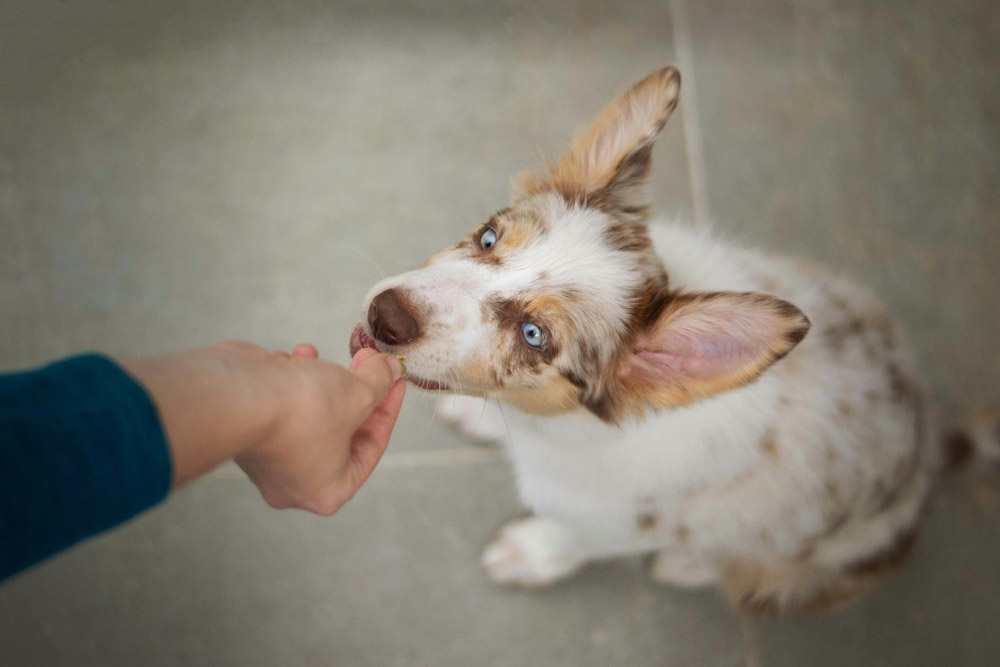
If you use food for training or enrichment, one simple trick is to take some of your pet’s normal daily food allowance and use that rather than automatically adding extra calories.
Portion guides on food packaging are useful starting points rather than a guarantee of exactly what an individual pet needs. Age, activity, neuter status, health and individual metabolism can all affect requirements. PDSA advises adjusting food amounts according to an individual pet’s condition and activity rather than relying solely on the packet recommendation.
If your pet needs to lose a significant amount of weight, getting professional guidance is worthwhile. Cats in particular should not undergo sudden or severe calorie restriction, and International Cat Care advises that weight loss in overweight cats should be controlled rather than rapid.
Watch how your pet moves as well as how they look
One of the most useful things you can do at home costs nothing.
Watch your pet.
Does your dog get up from bed smoothly? Do they still jump into the car easily? Have they started hesitating before stairs? Are walks getting shorter because they want to turn home?
Does your cat still jump onto their usual windowsill? Are they climbing their cat tree or choosing lower surfaces? Are they grooming themselves normally, including around their back and hindquarters?
Changes in everyday movement can be gradual, particularly when joint discomfort develops slowly. Because we see our pets every day, it is remarkably easy to adapt to those little changes without realising how much has altered.
Taking the occasional short video of your pet walking, getting up or using stairs can give you something to compare over time.
Your hands and eyes are useful health-checking tools
You don’t need to become obsessed with your pet’s weight.
Instead, make body condition part of the normal things you notice about them.
Feel their ribs occasionally. Look at their waist. Notice whether their shape is changing. Pay attention to how easily they move and whether they still choose to do the activities they used to enjoy.
The scales add another useful piece of information, but they make much more sense when considered alongside body condition, muscle and movement.
If your pet’s weight or shape has changed unexpectedly, they seem less willing to move, or you’re simply unsure what a healthy body condition should look like for them, ask for advice.
If you have access to PawSquad, you can speak to a vet through the app 24/7. Nutrition consultations are also available if you would like individual guidance around your pet’s diet, weight or changing nutritional needs, while mobility consultations can help if you have noticed changes in the way your pet gets up, walks, jumps or moves around at home.