
Making life easier for dogs with mobility challenges
Dogs with arthritis, joint disease, or age-related stiffness can struggle with everyday activities like walking on slippery floors, climbing stairs, or getting into bed. A few small home adaptations can make a huge difference to your dog’s comfort, confidence, and safety.
Preventing slips and falls
Slippery floors are one of the most common causes of accidents for mobility-restricted dogs. To make moving around safer:
- Use carpets, rugs, or rubber-backed mats on smooth surfaces.
- Secure them with non-slip tape to prevent movement.
- Focus on high-traffic areas or places where your dog changes direction frequently.
- Trim long hair and nails to improve grip.
- Dog boots can help short-term but aren’t suitable for prolonged use, and some dogs need gentle training to tolerate them.
- Consider blocking off non-essential areas of the home to limit risk.
Stairs and thresholds
Stairs can be difficult and even dangerous for dogs with reduced mobility.
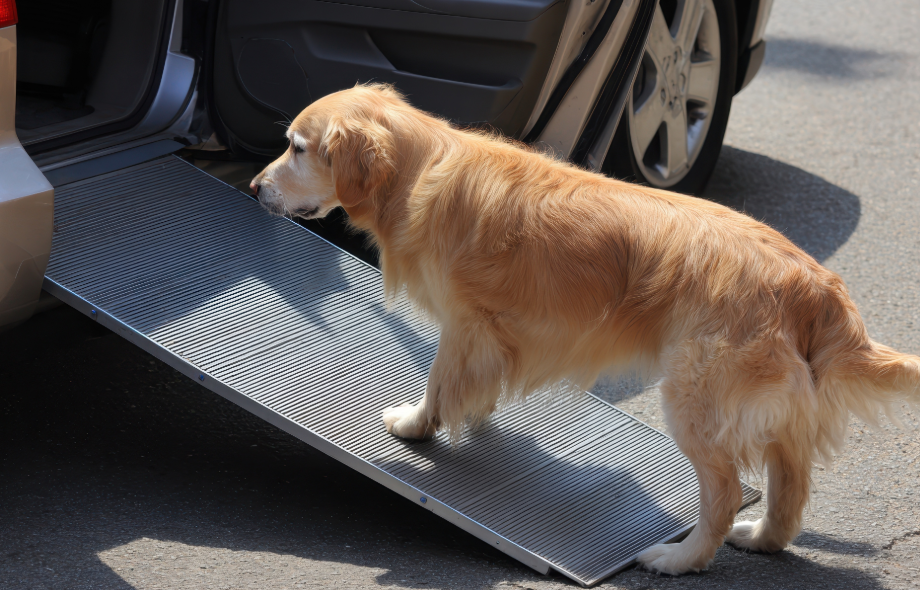
- Fit ramps (permanent or portable) with a non-slip surface for easier access.
- Use stair gates or lightweight barriers to prevent unsupervised climbing.
- Ensure all steps and thresholds are covered with non-slip material.
- Harnesses can assist dogs to balance and control their movement on the stairs. Harnesses should be padded and well fitted.
- Slings for transporting dogs are available and can help where stairs are unavoidable and can’t be modified. Always seek advice on appropriate use to avoid any harm to your pet or yourself.
- Threshold ramps are available from companies that provide equipment for disability needs.
Comfortable and accessible sleeping areas
Resting comfortably is vital for dogs with stiff joints.
- Choose a low, supportive bed – memory foam mattresses are a great option.
- Tapered edges and non-slip pads under the bed can make it easier to get on and off.
- Ensure there’s space around the bed for your dog to manoeuvre easily.
- Keep surrounding flooring soft, secure, and non-slip to prevent slips when rising.
Furniture and resting spots
Jumping on and off furniture can aggravate pain or cause injury.
- A floor bed may be safest for dogs with significant stiffness.
- If they still use furniture, provide a stable ramp with a non-slip covering.
- Always ensure the area around the furniture is secure and padded to minimise falls.
Toilet access and outdoor movement
Dogs with limited mobility benefit from frequent toilet breaks and easy outdoor access.
- Keep pathways to the garden or toilet area clear, uncluttered, and non-slip.
- Encourage regular short trips outside to prevent stiffening up through long periods of inactivty.
- Use a support harness or sling to help your dog balance while walking or toileting.
Interactions with other dogs
Dogs with mobility issues can feel vulnerable around more energetic companions.
- Don’t put the dog in a position where it is forced to deal with rough or high-energy play from other dogs.
- Choose calm, predictable dogs for social contact.
- Always make sure the dog can easily get away from other dogs, ideally with a quiet space to retreat to.
Travel and transport
Travelling safely is especially important for less mobile dogs.
- Use sturdy, non-slip ramps for getting larger dogs in and out of cars. The dog may require training to use these safely.
- Smaller dogs can be lifted into the car with care.
- Add cushioning in the boot to prevent discomfort.
- Harnesses may prevent falls in the car.
- Keep journeys steady and smooth, avoiding sharp turns or sudden stops.
- Allow frequent breaks for toileting and stretching during longer trips.
In summary
Adapting your home and activities for a dog with mobility issues can greatly improve their wellbeing and independence.
With thoughtful adjustments – from non-slip flooring and ramps to supportive beds and calm routines, you can help your dog stay safe, active, and comfortable as they age.