
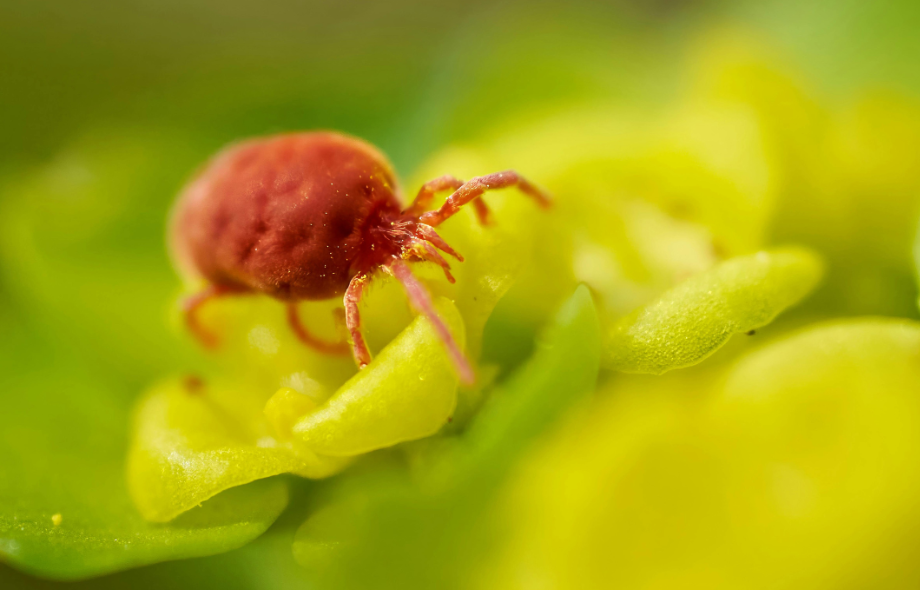
Harvest mites, (Neotrombicular Autumnalis), as the name suggests, are tiny bright orange mites which are seen in the UK from late summer to Autumn. They attach and feed on any animal they encounter, causing intense irritation, inflammation and sometimes even skin infections.
How do dogs and cats become infected?
Harvest mites are commonly found in woodland and grassy areas, but they can be picked up by your pet from anywhere in the environment. Typically, the mites sit on vegetation and leaves, waiting for an animal to brush past so that they can attach to them and start feeding. It is in fact the larval stage of this mite which attaches on to your pet to feed. It bites through the skin and releases digestive enzymes. It is these digestive enzymes which cause the intense irritation and itching. The degree of irritation varies between individual animals. The larvae will remain attached for 2-3 days before dropping off the animal to continue their development into adult mites.
It is also possible that mites can be spread from animal to animal if living in close proximity.
What are the symptoms?
Harvest mites can be seen by the naked eye as very tiny orange dots on the skin. Their favourite sites on your pet include between the toes and in Henry’s pocket (the small pocket on the outer edge of your pet’s ear flap). They can also be found around the nipples, in the armpits and groin, legs and around the genitals.
The first signs may be that your pet is scratching or biting themselves more than usual. You may see reddened, sore areas of skin and in severe cases, the skin may become crusty and wet from secondary infections.
Treatment
Unfortunately, there is no specific product available which kills the mites, however, there are some flea treatments which can be effective. If you are suspicious your pet may have Harvest mites, it is worth getting in contact with your vet or one of our friendly vets here at Pawsquad.
If your dog becomes incredibly itchy and develops sore skin, they may need to be seen by a vet so that they can provide some anti-inflammatories to help calm their skin reaction. If there is a severe skin infection, your vet may also want to provide some antibiotics, although thankfully, these cases are rare.
Prevention
There are no licensed products available which prevent harvest mites however, there are a few things you can do to minimise the risk of them being picked up:
- Try and avid longer grass/heavy vegetation or wooded areas during peak season.
- Walking your pets in early morning or late evening may help as harvest mites are most active during the day, especially if dry and sunny.
- Keeping your dog moving when out on a walk to minimise the risk of the mites climbing on to your pet.
- Check your pets over after coming in from the outside, paying particular attention to between the paws, around the ears and areas of skin with less fur.

Vet author: Dr. Ruth Northam
BVSc MRCVS
Ruth is a vet working in collaboration with PawSquad. She has a particular interest in geriatric medicine, pain management and end-of-life care.