

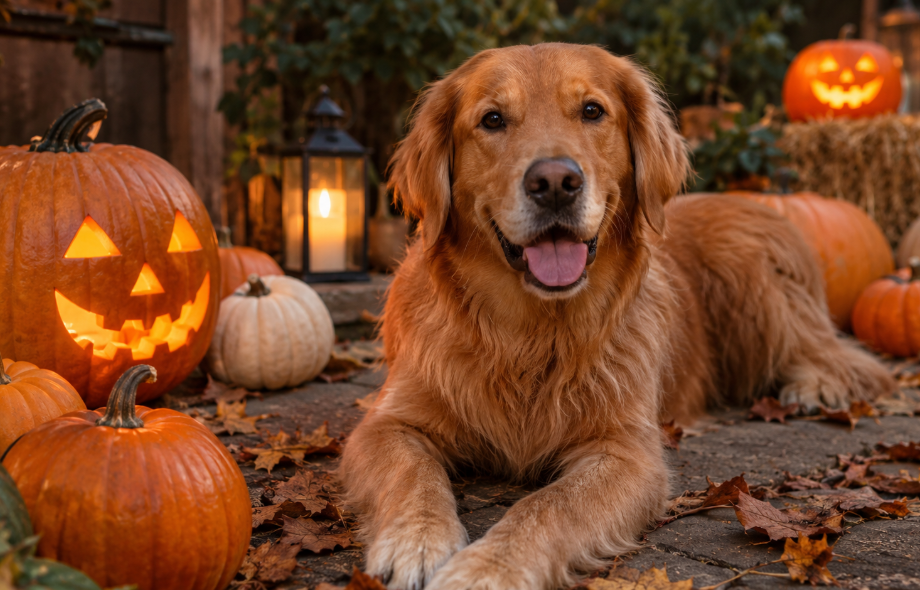
Halloween can be great fun for people, but from a pet’s point of view it can be a surprisingly strange evening.
There may be bowls of sweets within reach, unfamiliar decorations around the house, candles inside pumpkins and a steady stream of people arriving at the front door wearing unusual costumes. For cats and dogs that prefer a predictable routine, that can be a lot to deal with.
Most Halloween problems can be avoided with a little preparation. Keeping potentially harmful foods out of reach, choosing pet-safe decorations and giving cats and dogs somewhere quiet to retreat can help the evening pass without an unexpected veterinary visit.
Puppies and younger dogs often explore with their mouths, so they may be especially tempted to chew unfamiliar decorations. If you have a young dog, think carefully about what you put out and where: trailing wires, dangling decorations and small parts that could be swallowed should all be kept out of reach.
What are the main Halloween hazards for cats and dogs?
Halloween can introduce several risks into a pet’s normal environment at the same time.
These include:
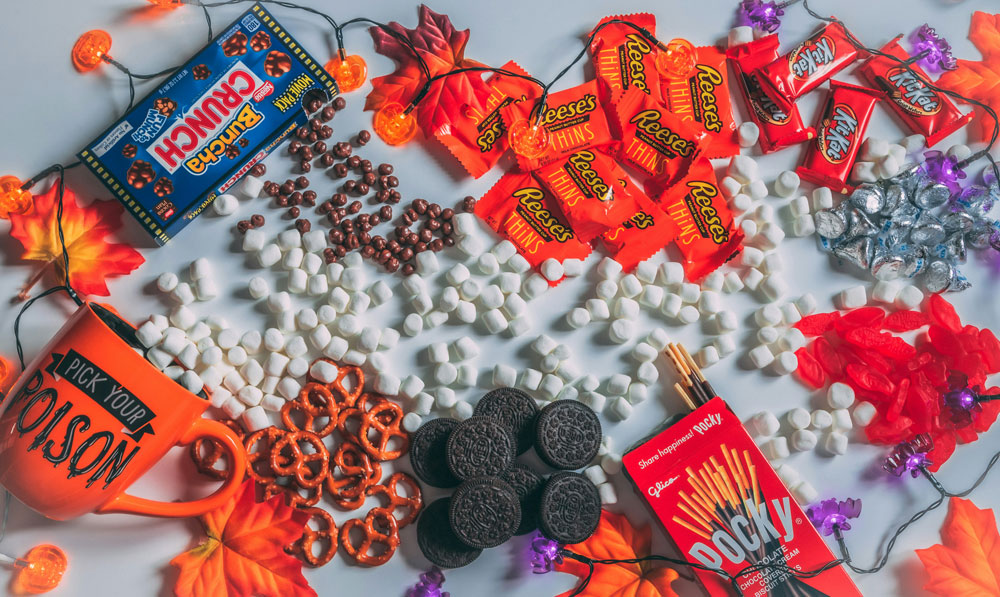
- Chocolate and other unsuitable human foods
- Sugar-free sweets containing xylitol, which can also be labelled as E 967, birch sugar, birch sap or wood sugar
- Sweet wrappers and packaging
- Candles and candlelit pumpkins
- Dangling or chewable decorations
- Costumes worn by pets or visitors
- Repeated knocking and ringing of the doorbell
- Open front doors as trick-or-treaters arrive
- Parties, unfamiliar visitors and changes to the normal routine
The risks are not identical for every pet. A determined dog may be far more interested in the sweet bowl than a cat, while a nervous cat may find repeated visitors particularly unsettling and spend much of the evening hiding.
Knowing an individual pet’s habits makes it easier to plan ahead.
Why is chocolate dangerous for pets?
Dark chocolate and products with high cocoa solids may contain substances called methylxanthines, including theobromine, which cats and dogs cannot process as efficiently as people.
Chocolate poisoning can cause signs such as vomiting, diarrhoea, restlessness and an increased heart rate. More serious poisoning can cause tremors, abnormal heart rhythms, seizures and other potentially life-threatening problems.
The risk depends on several factors, including the type and amount of chocolate eaten and the size of the animal. Dark chocolate and cocoa products generally contain more theobromine than milk chocolate.
Although cats can be poisoned by chocolate, dogs are more commonly affected because they are generally more inclined to eat sweet foods and may consume a large quantity if given the opportunity.
An owner should not wait for symptoms to appear if a pet has eaten chocolate. The veterinary practice should be contacted promptly with as much information as possible, including the pet’s weight, the type of chocolate, approximately how much is missing and when it was eaten.
What is xylitol and why is it dangerous to dogs?
Some sugar-free sweets, chewing gums and other low-sugar products contain a sweetener called xylitol, which can also be labelled as E 967, birch sugar, birch sap or wood sugar.
Xylitol is particularly dangerous to dogs.
In dogs, it can trigger a rapid release of insulin and cause blood sugar to fall to dangerously low levels. Larger exposures can also cause severe liver damage.
Signs can include:
- Vomiting
- Weakness
- Lethargy
- Loss of coordination
- Tremors
- Collapse
- Seizures
Treatment may be needed before any symptoms develop, so suspected xylitol ingestion in a dog should always be treated as an urgent reason to contact a vet.
Checking the ingredients is important because xylitol may be present in products that do not immediately look dangerous.
Sweet wrappers can cause problems too
The food itself is not the only potential hazard.
Dogs in particular may swallow sweets complete with wrappers, foil or plastic packaging. Cats may also play with small, crinkly wrappers and accidentally ingest them.
Packaging can become lodged in the throat or digestive system and may cause a blockage.
Signs of a gastrointestinal blockage can include repeated vomiting, reduced appetite, abdominal discomfort, lethargy and difficulty passing faeces.
It is safer to keep the entire trick-or-treat bowl out of reach rather than simply removing the chocolate varieties.
Dropped sweets and wrappers should also be picked up promptly, particularly in households with a dog that will investigate almost anything edible.
If you know or strongly suspect your pet has eaten a wrapper, call us or your vet straight away for advice. Don’t wait to see if any symptoms develop.
Can pets eat pumpkin?
Plain pumpkin flesh is not generally considered poisonous to cats or dogs, but that does not make a Halloween pumpkin a suitable snack.
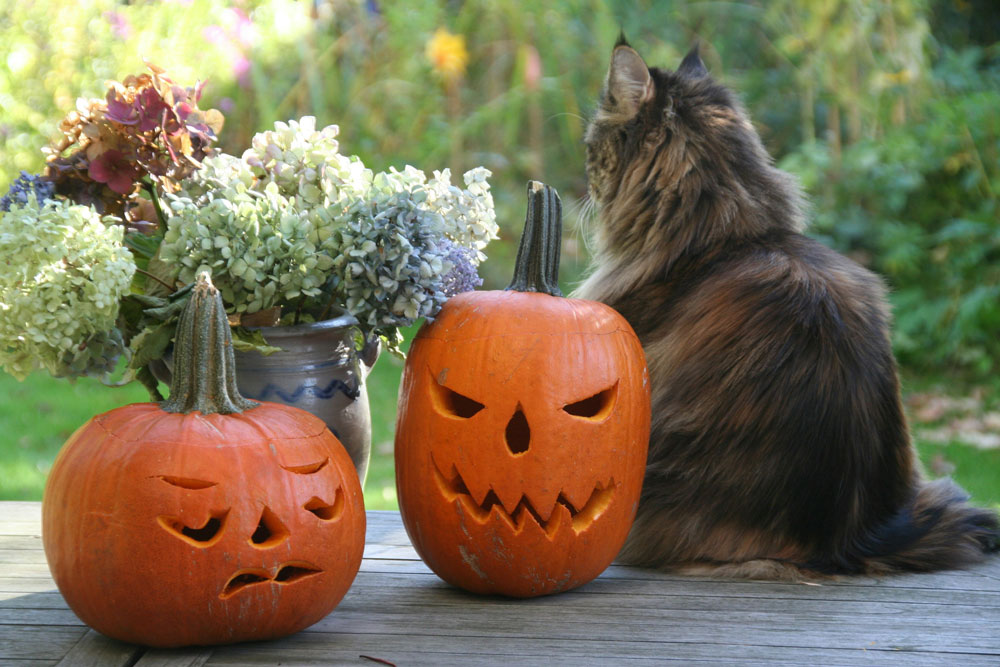
Large amounts can cause digestive upset, and carved pumpkins left sitting for several days can begin to spoil or develop mould.
The greater concern is often what is inside or attached to the pumpkin. A candle creates a risk of burns and fire, while decorative materials may be unsafe if chewed or swallowed.
Once a carved pumpkin starts deteriorating, it should be disposed of somewhere pets cannot reach it.
Are Halloween candles dangerous for pets?
Any naked flame and a curious pet are a poor combination.
A cat brushing past a candle can singe whiskers or fur, while an enthusiastic dog’s tail can knock a candle over. Pets investigating a lit pumpkin may also burn the nose, paws or face.
Battery-operated candles are a safer option for homes with animals.
Even then, the decoration itself should be positioned securely. Small batteries can be extremely dangerous if chewed or swallowed, so battery compartments should be inaccessible to pets.
Open flames should never be left unattended around animals.
Halloween decorations can look like toys
Dangling ghosts, fake cobwebs, string, ribbons and flashing lights may be decorative to people but interesting playthings to a cat or dog.
Cats may become tangled in string-like decorations or try to climb hanging displays. Dogs may chew decorations and swallow pieces that can cause choking or gastrointestinal obstruction.
Electrical cables are another consideration. A pet that chews through the wire of Halloween lights could receive an electric shock or suffer burns to the mouth.
Decorations should be placed where pets cannot chew, pull down or become tangled in them.
Owners of particularly curious cats may find that simpler decorations are the safest option.
Should cats and dogs wear Halloween costumes?
For most pets, there is no benefit to wearing a Halloween costume.
An outfit may restrict normal movement, interfere with grooming or toileting, make it harder for an animal to communicate through normal body language or simply cause unnecessary stress.
Cats are particularly likely to find being enclosed in unfamiliar clothing uncomfortable. A frightened cat may panic while trying to remove a costume and could injure themselves in the process.
Dogs vary considerably, but tolerating a coat for practical reasons does not necessarily mean a dog is comfortable wearing a complicated costume, hat or mask.
Signs that a pet is uncomfortable can include:
- Freezing or refusing to move
- Trying to remove the clothing
- Flattening the ears
- Lip licking or yawning
- Panting when it is not hot
- Crouching
- Hiding
- Becoming unusually quiet or restless
A Halloween photograph is not worth causing distress.
A seasonal blanket, pet-safe toy or decorated background can create the same effect without requiring the animal to dress up.
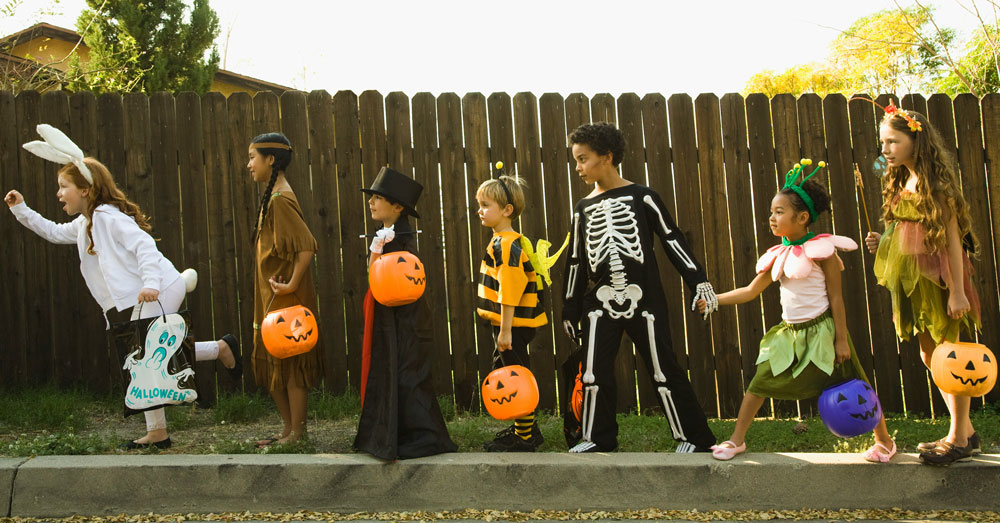
Costumes on people can worry pets too
A pet does not necessarily recognise a familiar person in the same way once that person is wearing a large hat, mask, wig or flowing costume.
Masks can obscure facial features. Costumes may change a person’s outline and the way they move, while accessories can make unfamiliar noises.
A dog that is normally delighted to greet visitors might bark or back away from someone dressed as a ghost or monster. A cat may disappear as soon as unusually dressed people enter the house.
Pets should be allowed to keep their distance.
Visitors, particularly excited children, should not follow a frightened animal, reach into a hiding place or insist on interacting.
Why does the doorbell cause so much stress?
For some dogs, the doorbell is already exciting on an ordinary day. On Halloween, it may ring repeatedly for several hours.
Each ring can trigger barking, running to the door and another burst of excitement or anxiety. A dog that repeatedly becomes highly aroused may find it increasingly difficult to settle as the evening continues.
Cats can also be affected by repeated knocking, unfamiliar voices and the front door constantly opening.
Preparation can make a big difference.
If an animal already struggles with visitors, Halloween evening is not the ideal time to try to teach them to tolerate dozens of unexpected callers.
How can owners reduce doorbell stress on Halloween?
The easiest solution may be to reduce how often the doorbell needs to ring.
Where appropriate, a clearly labelled bowl of sweets can be left outside for trick-or-treaters. Care is needed to ensure it is inaccessible to pets and wildlife.
A polite sign asking visitors not to knock or ring can also help households with very anxious animals.
Inside the home, familiar background sound such as television, radio or music can reduce the contrast between silence and sudden knocking.
For dogs, a food toy, chew or simple enrichment activity may provide something else to focus on, provided the dog is relaxed enough to engage with it.
Cats and dogs should also have access to a quiet area away from the front door.
Create a quiet retreat before visitors arrive
A safe space is most useful when a pet already considers it somewhere comfortable.
For dogs, this may be a bed in a quiet room, a covered crate if the dog is already happy using one, or a familiar corner away from the hallway.
Cats often prefer greater choice. Some feel safest in an enclosed box or under furniture, while others prefer a high shelf or the top of a wardrobe.
Food, water and comfortable bedding can be made accessible nearby. Cats that are being kept indoors should also have easy access to litter trays.
The pet should be able to enter and leave the safe area freely.
A frightened cat should not be pulled out of hiding, and a dog should not be repeatedly brought back to meet visitors if they would rather remain somewhere quiet.
Be careful every time the front door opens
Halloween can be a particularly easy night for a pet to escape.
A dog that normally waits politely may rush through the door when startled. A frightened cat can move extraordinarily quickly through a small gap.
Pets that are likely to approach the doorway can be kept securely in another part of the home while trick-or-treaters are expected.
Microchip contact details should also be kept up to date.
Dogs should have the identification required when out in public, and it is sensible to check collars, tags and leads before Halloween rather than discovering something is missing when an animal has escaped.
Should cats stay indoors on Halloween?
Where possible, outdoor cats can be encouraged to return home before Halloween activity begins and kept safely inside during the busiest part of the evening.
The combination of darkness, increased traffic, unfamiliar people, loud parties and, in some areas, fireworks can make the environment more stressful than usual.
Cats that normally toilet outside will need a litter tray if the cat flap is being closed.
Starting an earlier evening routine in advance can be easier than suddenly changing the rules on Halloween itself.
A cat that chooses to hide once indoors should usually be allowed to do so.
What about dog walks on Halloween?
Walking earlier in the day can avoid some of the busiest trick-or-treating period.
People wearing costumes, groups of excited children and unfamiliar decorations can all be unsettling for some dogs. Halloween also falls close to the main UK firework period, so unexpected bangs may be another consideration after dark.
A nervous dog does not need to be taken through a busy neighbourhood simply because that would normally be the evening routine.
A shorter walk at a quieter time, combined with suitable activity at home, may make Halloween much easier for them.
Can owners comfort a frightened pet?
A frightened animal that seeks reassurance can be given calm attention.
Fear is an emotional response. Comforting an animal that approaches for support does not mean an owner is deliberately teaching them to be afraid.
Equally, not every frightened pet wants to be touched.
A cat that retreats under the bed may prefer to stay there. A dog may choose to lie beside a familiar person without wanting constant interaction.
The animal’s behaviour should guide the response.
Punishing barking, hiding, toileting accidents or other fear-related behaviour is likely to increase stress rather than solve the underlying problem.
When should a vet be contacted after a Halloween mishap?
Veterinary advice should be sought promptly if a pet may have eaten a potentially toxic food or substance.
An owner should not wait for symptoms to appear following suspected ingestion of chocolate or, in a dog, a product containing xylitol.
Urgent veterinary advice is also needed if a pet:
- Has swallowed part of a decoration, wrapper or other object
- Has been burned
- Has received an electric shock
- Is repeatedly vomiting
- Develops tremors, weakness, collapse or seizures
- Is struggling to breathe
- Appears to be in significant pain
- Has sustained an injury while trying to escape
Owners should not try to make a pet vomit unless specifically instructed to do so by a veterinary professional.
Packaging or ingredient information can be useful when speaking to a vet, so it should be kept where possible.
Halloween does not have to be frightening for pets
Most Halloween hazards are avoidable.
Keeping sweets and decorations securely out of reach, replacing naked flames with safer alternatives, allowing pets to skip the costumes and planning for repeated visitors can remove many of the risks before the evening begins.
It is also worth considering Halloween from the animal’s point of view. A front door that will not stop opening, strangers in masks and a house full of unfamiliar noises may be exciting for people but overwhelming for a cat or dog.
Giving pets choice, somewhere quiet to retreat and a predictable routine can make Halloween considerably less spooky.
Pet owners with access to PawSquad can speak to a vet through the app 24/7 if their cat or dog has eaten something they should not have, is behaving unusually or they are unsure whether veterinary attention is needed. Pets requiring emergency treatment, a physical examination, medication or ongoing care should be seen by an appropriate veterinary practice.