


Fleas are a common frustration for dog owners and can be tricky to clear once they infest a home. As well as making your dog itchy and uncomfortable, they can trigger painful skin allergies and spread other parasites, such as tapeworms.
In this article, we’ll explain how to spot the signs of fleas, the best ways to get rid of them, and how to choose the best prevention plan tailored to your dog’s needs.
How do dogs catch fleas?
Dogs can pick up fleas almost anywhere – from parks and fields to urban areas, and even your own home (it’s easy to bring fleas and/or their eggs into your home on your clothes and shoes!). While fleas can jump between pets, most infestations start when your dog enters an area where an infested animal has previously been.
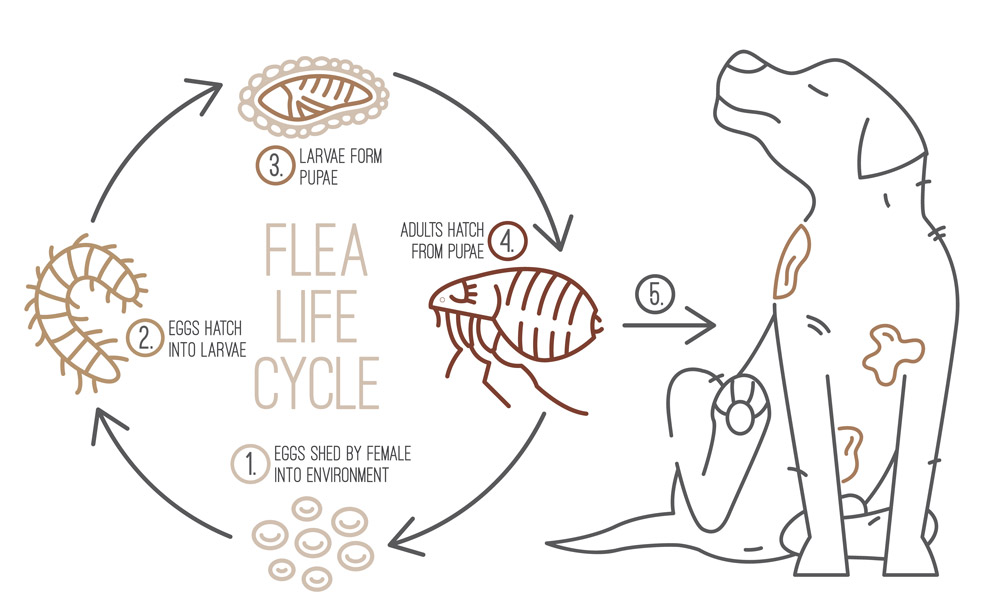
Neighbourhood cats, other dogs, and wildlife such as foxes or hedgehogs can drop flea eggs into the environment as they pass through. These eggs settle wherever they are dropped, then hatch and develop into pupae. Flea pupae are incredibly hardy and can remain dormant in the environment for up to a year. They stay tucked away until they sense the heat or vibrations of a passing host, at which point they emerge and hop onto your dog.
Because we keep our homes warm with central heating nowadays, fleas don’t disappear when the weather gets cold; they are much more of a year-round problem these days.
What are the symptoms of fleas in dogs?
Spotting fleas early makes it much easier to get them under control. While some dogs might only have a mild itch, others can have a much more serious reaction.
Common signs to look out for:
- Scratching or nibbling: You might notice your dog suddenly jumping up to bite at their skin, particularly around the base of their tail, groin, or armpits.
- Flea dirt (poo): These look like tiny black specks in the fur. To check, place the specks on a damp white tissue – if they turn reddish-brown, it is flea dirt (digested blood).
- Live fleas: You may see small, dark-brown insects scurrying through the fur – however they are very good at hiding.
- Skin changes: Look for red patches, crusty scabs, or areas where the fur looks thin or “spiky.”
Severe Symptoms and Skin Allergies
While some dogs merely feel an itch, others suffer from Flea Allergy Dermatitis (FAD). This is a hypersensitivity to flea saliva. In these dogs, a single flea bite can trigger an intense, whole-body reaction.
Symptoms of FAD include:
- Intense itching: Uncontrollable, frantic scratching and chewing.
- Alopecia (hair loss): Significant hair loss, often in around the hindquarters.
- Secondary Infections: The broken skin from scratching often leads to “hot spots” (moist dermatitis/skin infections) that require veterinary intervention.
- In severe infestations, particularly in puppies or small breeds, the amount of blood lost to feeding fleas can.
Anaemia: In very small puppies or dogs that are already unwell, a heavy flea infestation can cause anaemia because the fleas are drinking so much of the dog’s blood. This is a serious condition that can lead to lethargy, pale gums, and in severe cases death.
How to treat fleas
To get rid of fleas, you must treat your dog and your home at the same time. If you only treat your pet, new fleas will hatch from your carpets and hop right back on.
Treating your dog
There are lots of different products available, and it can be confusing to know which one to pick. Generally, flea treatments fall into three groups:
- Prescription treatments: These are often the most effective – available directly from your vet, or with a prescription written by them. Prescription products undergo rigorous testing and usually contain newer active ingredients that fleas have not yet developed resistance to. These can be administered as “spot-ons” (liquid on the neck), tablets, or long-acting collars.
- Non-prescription, NFA-VPS products: Sold on online pharmacies and certain pet shops, these are dispensed by a professional and are often more effective than ‘off the shelf’ brands. You will need to provide details about your pet to buy one of these products.
- ‘Off-the shelf’ products: These products are available quite literally off-the-shelf in certain pet shops, supermarkets and online pharmacies. While these products are easy to get hold of, they can contain ineffective ingredients, or older ingredients that fleas may have become resistant to.
It’s vital to consult a professional to ensure the product you choose is safe for your dog’s specific breed, age, and weight.
Treating your home
Only about 5% of a flea infestation lives on your dog; the remaining 95% exists as eggs, larvae, and pupae in your carpets, furniture, and bedding. If you only treat your pets, new fleas will simply hatch from your carpet and re-infest them. You must:
- Use a household spray: Use a vet-recommended flea spray on carpets and furniture.
Warning: These are often toxic to cats, so follow the instructions carefully.
- Hot wash: Wash your dog’s bedding at 60°C to kill eggs.
- Vacuum: Vacuuming daily helps “wake up” dormant fleas so they can be killed by your household spray.

Prevention: A modern approach
For many years, the standard advice was “blanket treatment” – applying a flea chemical to every pet every month regardless of circumstances. However, due to a growing concern among scientists about the rapid drop in insect numbers worldwide and the suggestion that flea treatments for pets may be contributing to this problem, the veterinary community is moving toward a more “risk-based” approach.
Tailoring protection to your dog
Every dog’s life is different. Instead of a one-size-fits-all schedule, you should consider:
- Your dog’s lifestyle: A dog that lives in a high-rise city apartment and only walks on paved streets has a vastly different risk profile than a working spaniel running through forests and fields shared with wildlife.
- Environment: Does your garden back onto woods? Are there many foxes nearby?
- Social Life: Does your dog attend a busy daycare or frequent popular dog parks?
- Your home: Do you have other pets, like a cat that goes outdoors?
- Health needs: If your dog suffers from a flea allergy (FAD), they are likely to need regular, monthly treatment. For these dogs, one bite is enough to cause a severe skin reaction, so keeping them on a strict schedule is essential for their welfare.
- Swimming and Bathing: Does your dog go swimming or get bathed regularly? When dogs treated with “spot-on” products swim in rivers or are washed at home, these chemicals can wash into our water systems. Once there, they can be harmful to the fish and insects that keep our rivers healthy. In this scenario, your vet may suggest using a tablet flea-treatment instead.
By assessing these factors, you and your vet can decide if your dog needs monthly protection or if a seasonal approach is more appropriate.
When Regular Treatment is Essential
While a flexible approach works for many, regular, year-round prevention remains a “must” for certain dogs:
- FAD Sufferers: For dogs with flea allergies, the goal is zero bites. Regular prevention is the only way to ensure they stay healthy and happy.
- High-Risk Environments: Dogs in multi-pet households or those in constant contact with livestock or wildlife should remain on a consistent schedule.
- Household Health: If there are vulnerable humans in the house (infants or the immunocompromised), maintaining a flea-free environment through regular prevention is often the safest route.
Ultimately, the best defence against fleas is a proactive conversation with your vet to ensure your dog is protected in a way that is effective for them and their lifestyle.
Download the PawSquad app today and gain access to 24/7 online vet access and advice. We’re here for whatever advice you need, whenever you want it.