

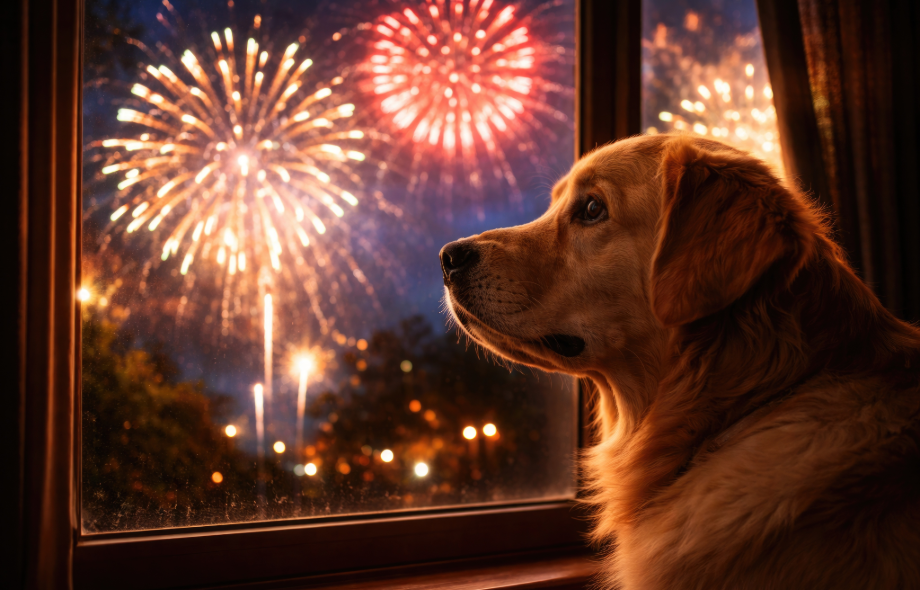
Bonfire Night may still feel a while away, but for dogs that struggle with fireworks, the best time to prepare is before the bangs begin.
Firework anxiety can range from mild unease to severe panic. Some dogs become restless or clingy, while others shake, hide, stop eating or try to escape. Once a dog is frightened, it becomes much harder for them to learn that the noise is safe. Starting several weeks in advance gives owners time to build positive associations, create a safe place and seek veterinary or behavioural support if it is needed.
For dogs with a history of firework fear, September and early autumn are an ideal time to start preparing.
Why are dogs scared of fireworks?
Fireworks combine several things that dogs can find difficult: loud noises, sudden flashes, vibration and unpredictability.
A dog cannot understand that the bang outside is part of a celebration several streets away. The brain may interpret an unexpected explosion as a possible threat, triggering the body’s normal fear response. Heart and breathing rates can increase, muscles tense and the dog becomes ready to escape, hide or defend themselves.
The unpredictable nature of fireworks can make them particularly difficult. A washing machine or vacuum cleaner might also be noisy, but it usually follows a recognisable pattern. Fireworks can arrive without warning, from different directions and at different volumes.
Some dogs appear unbothered for years and then become frightened later in life. A particularly close or loud firework can sometimes trigger a new fear, while pain or other health problems may also make a dog more sensitive to noise. A dog that suddenly develops a strong fear of fireworks when they were previously relaxed should therefore be discussed with a vet.
What does firework anxiety look like in dogs?
Not every frightened dog hides under the table. Some signs of anxiety are much easier to miss.
Signs can include:
- Panting when the room is not hot
- Pacing or being unable to settle
- Trembling or shaking
- Becoming unusually clingy
- Hiding or trying to squeeze into small spaces
- Barking, whining or crying
- Drooling or repeatedly licking the lips
- Refusing food or favourite treats
- Toileting indoors
- Trying to escape through doors, windows or fences
- Becoming unusually restless or irritable
Even relatively subtle changes matter. A dog that repeatedly looks towards a window, stops taking treats or suddenly follows family members from room to room may already be feeling worried.
Recognising those early signs is useful because support works best before a dog reaches the point of panic.
When should you start preparing your dog for firework season?
As early as possible.
For a dog that already has a significant fear of fireworks, behaviour work may take months rather than days. Starting several weeks before Bonfire Night still gives owners much more scope to help than waiting until fireworks have already begun.
Preparation can include getting a safe space ready, gradually introducing recorded firework sounds where appropriate, checking microchip details and speaking to a vet about dogs that have struggled badly in previous years.
The aim is not to expose a frightened dog to as much noise as possible. Successful preparation is gradual enough that the dog remains relaxed.
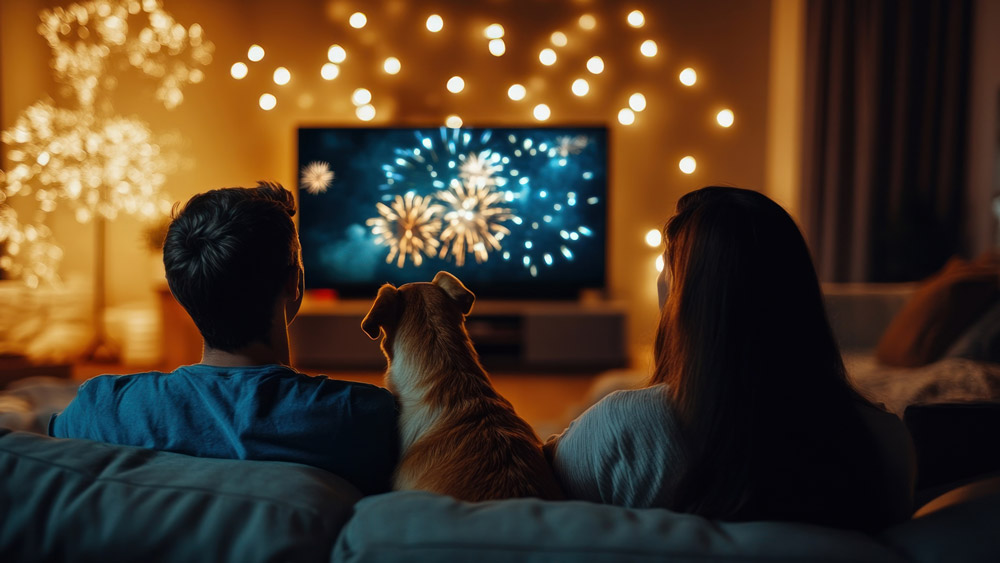
Firework sound training needs to be gradual
Recorded firework sounds can sometimes be used as part of desensitisation and counterconditioning.
Desensitisation means introducing the sound at such a low level that the dog notices it without becoming frightened. Counterconditioning then helps create a different emotional association, often by pairing the sound with something the dog enjoys.
For example, a recording might initially be played extremely quietly while the dog is relaxed and eating a favourite treat or taking part in an enjoyable activity. If the dog remains completely comfortable over repeated sessions, the volume can be increased very gradually.
The dog’s behaviour should determine the pace.
If there is panting, lip licking, freezing, hiding, pacing, refusal of food or another sign of concern, the exercise has become too difficult. The sound should be stopped or reduced rather than continuing in the hope that the dog will simply get used to it.
Playing loud firework recordings to a frightened dog can make matters worse. Dogs with established noise fears may benefit from an individual plan from a suitably qualified behaviour professional, particularly where previous firework seasons have caused significant distress.
Create a safe place before it is needed
A hiding place can be very reassuring for some dogs, but it is much more useful if it already feels familiar and safe before fireworks begin.
The ideal location will vary. Some dogs prefer a covered crate, provided they are already happy and relaxed in a crate. Others choose the space behind a sofa, beneath a table or in a quiet room away from windows.
Comfortable bedding can be added, along with familiar toys and access to water. Blankets may help make an open area feel more enclosed, provided there is plenty of ventilation and the dog can enter and leave freely.
The dog should never be shut into the space or forced to use it. A safe place works because the dog has control over whether to go there.
Spending calm time around the area during the weeks before Bonfire Night can help it become part of normal life rather than somewhere that suddenly appears when frightening noises start.
Make the house ready too
Firework preparation is not only about training.
Frightened dogs can behave very differently from normal, and a dog that has never previously tried to escape may bolt if startled by a loud bang.
Before peak firework season, owners can check that doors, windows, garden gates and fences are secure. Microchip contact details should also be checked and updated where necessary.
On evenings when fireworks are expected, curtains or blinds can be closed before it becomes dark. Keeping lights on indoors can make flashes outside less noticeable, while familiar television, radio or music may help mask some of the sudden noise.
Dogs should usually be exercised earlier in the day while it is still light rather than being taken for a walk once fireworks are likely to have started.
Should a frightened dog be comforted?
Yes, if the dog asks for reassurance.
There is an old idea that comforting a frightened dog will reward the fear and make it worse. Fear is an emotional response, however, rather than a behaviour a dog is deliberately choosing in order to gain attention.
A dog that approaches a trusted person for reassurance can be calmly stroked or allowed to stay close. A dog that prefers to hide should be given space.
The important point is to respond to the individual dog rather than forcing interaction. Pulling a dog out of a hiding place, repeatedly calling them over or insisting on play when they are frightened is unlikely to help.
Punishment should also be avoided. Barking, toileting indoors, scratching at doors or destructive behaviour during fireworks may all be signs of distress. Telling a frightened dog off can add another source of anxiety to an already difficult situation. Dogs Trust specifically advises calmly providing attention and comfort when a frightened dog seeks reassurance.
What can help on Bonfire Night itself?
Good preparation makes the evening easier, but owners may still need to adapt the normal routine.
Dogs should ideally be indoors well before fireworks are expected to begin. Windows and doors can be closed, curtains drawn and background sound switched on before the first bangs start.
A frightened dog should be allowed to choose where they feel safest. Some will want company. Others may retreat to their prepared den or another hiding place.
Food toys, chews or simple enrichment can be offered to dogs that are relaxed enough to enjoy them, but a dog that is too frightened to eat should not be pressured.
Trips outside for toileting may need to be kept brief and timed for quieter periods. A lead can provide an additional layer of security, even in situations where the dog would normally have more freedom.
Most importantly, the evening should be kept as predictable and calm as possible.

When should a vet become involved?
Owners do not need to wait until Bonfire Night to ask for veterinary help.
A vet should be contacted in advance if a dog has previously shown significant firework anxiety, particularly where there has been prolonged shaking or panting, escape attempts, destructive behaviour, inability to settle or severe distress.
A veterinary assessment is also sensible if noise sensitivity has appeared suddenly or become much worse, as pain and other health problems can sometimes alter the way a dog responds to sound.
For some dogs, behavioural changes and environmental management will be enough. Others may need additional support.
A vet can discuss whether medication is appropriate and may recommend referral to a suitably qualified behaviour professional. Where medication is prescribed, owners should follow the individual instructions carefully, as some treatments need to be given before the noise begins rather than once the dog is already extremely distressed.
Medication should only ever be given to the dog for whom it has been prescribed. Human medicines, leftover veterinary medicines and products prescribed for another pet should not be used.
PDSA and Dogs Trust both recommend speaking to a vet in advance where a dog is significantly frightened by fireworks rather than waiting until the event itself.
Can firework fear get worse each year?
It can.
Repeated experiences of intense fear can strengthen a dog’s negative association with a sound. Instead of becoming accustomed to fireworks, some dogs become increasingly sensitive to them.
That is one reason early support matters. The goal is not simply to get through 5 November each year. Reducing distress and preventing repeated panic may make future firework seasons easier to manage.
Dogs with severe noise fears often need a longer-term plan that continues after the fireworks have stopped.
What if fireworks start unexpectedly?
Not every display is advertised, and private fireworks can make the season unpredictable.
If an unexpected bang frightens a dog, the immediate priority is safety. Doors and windows should be secured and the dog should be allowed to move to whichever part of the home feels safest.
Curtains can be closed and familiar background noise used to reduce outside sound and flashes. If the dog seeks comfort, calm reassurance is appropriate. If they hide, they should be allowed to stay there.
Training exercises should not be attempted while a dog is already frightened. Desensitisation works when the dog is below their fear threshold, not during a real firework event.
Preparing now can make November easier
For a dog with firework anxiety, Bonfire Night preparation is much more than buying something calming on 4 November.
Starting early gives owners time to understand how their dog responds, prepare the home, establish a safe place and begin gradual sound work where it is appropriate. It also leaves time to seek veterinary or behavioural support before fireworks become frequent.
Some dogs will always find fireworks difficult, but fear should not simply be accepted as something they have to endure every year.
Pet owners with access to PawSquad can speak to a vet through the app 24/7 if they are concerned about their dog’s behaviour or are unsure whether a change could have a medical cause. Dogs needing medication, a physical examination or ongoing treatment should be seen by their usual veterinary practice.