
What this blog covers:
Already know what you are looking for? Click the links below to skip to each section.
What Causes Dental Disease in Dogs?
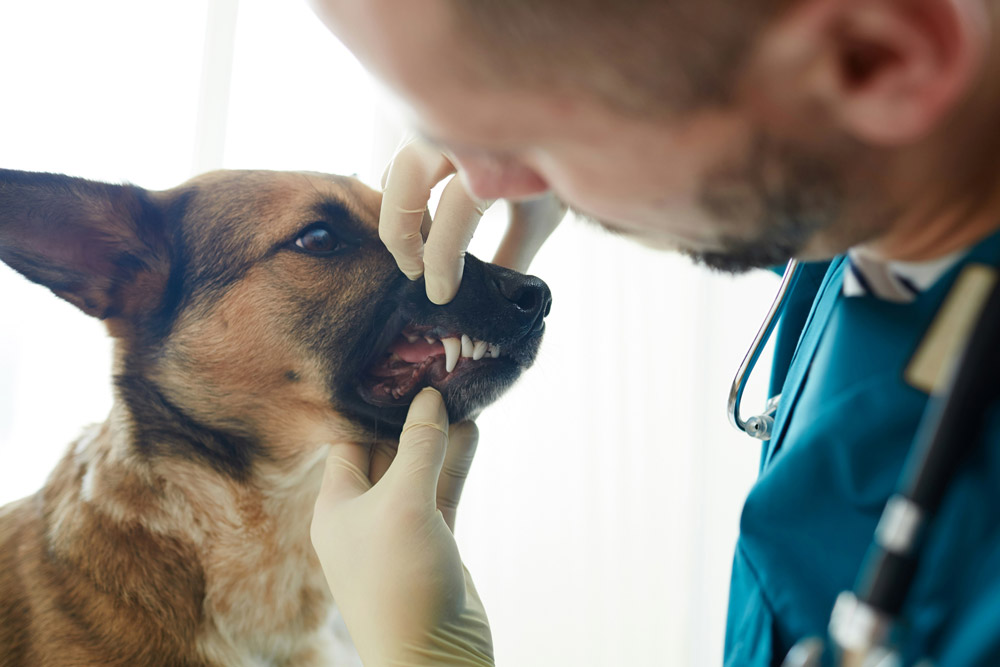
Dental disease is an extremely common problem for pet dogs, often causing significant pain and discomfort. The cause is nearly always poor oral hygiene, which leads to:
- Plaque build-up: When food and saliva mix, they create a sticky film of plaque (containing harmful bacteria) that covers the teeth. At this stage, plaque is soft and easy to brush away.
- Tartar formation: If plaque isn’t removed daily, it hardens into tartar. Tartar provides a perfect environment for harmful bacteria to produce toxins that damage the gums and teeth. This can then lead to issues such as gingivitis (inflammation of the gums), gum recession, tooth decay, tooth infections, and bone infections.
- Possible organ damage: The bacteria that live in and around tartar (as mentioned above) can also enter the bloodstream and affect the heart, kidneys, and liver.
Certain other factors can also increase a dog’s chance of developing dental problems:
- Breed: Certain breeds of dog are more likely to develop dental disease than others:
- Small & Toy Breeds such as Toy Poodles, Lhasa Apsos, Spaniels & Yorkshire Terriers
- Flat-faced breeds such as Pugs and Bulldogs
- Greyhounds
- Poor diet: Dogs fed an unsuitable diet or lots of sugary treats are likely to develop dental disease.
- Dental overcrowding: Teeth crowded into a small space are much harder to keep clean and more likely to develop problems.
- Age: As dogs get older, the cumulative effects of plaque build-up make dental disease more likely.
How to Spot the Signs of Dental Problems and Oral Pain
The early signs of dental disease can be surprisingly subtle. Most dogs are experts at hiding pain, which means dental problems often go unnoticed until they are advanced. To catch problems early, keep an eye out for these red flags:
- Bad breath: This is often the very first sign of dental disease; bad breath isn’t normal.
- Changes in eating habits: Dropping food, chewing awkwardly on one side, or suddenly preferring soft food.
- Excessive drooling: Producing more saliva than usual can be a response to mouth irritation or pain.
- Pawing or rubbing: Frequently pawing at the mouth or rubbing the face against furniture.
- Head shaking: Often mistaken for an ear problem, this can be a reaction to oral pain.
- Weight loss: A decreased appetite due to pain is often one of the last signs to appear.
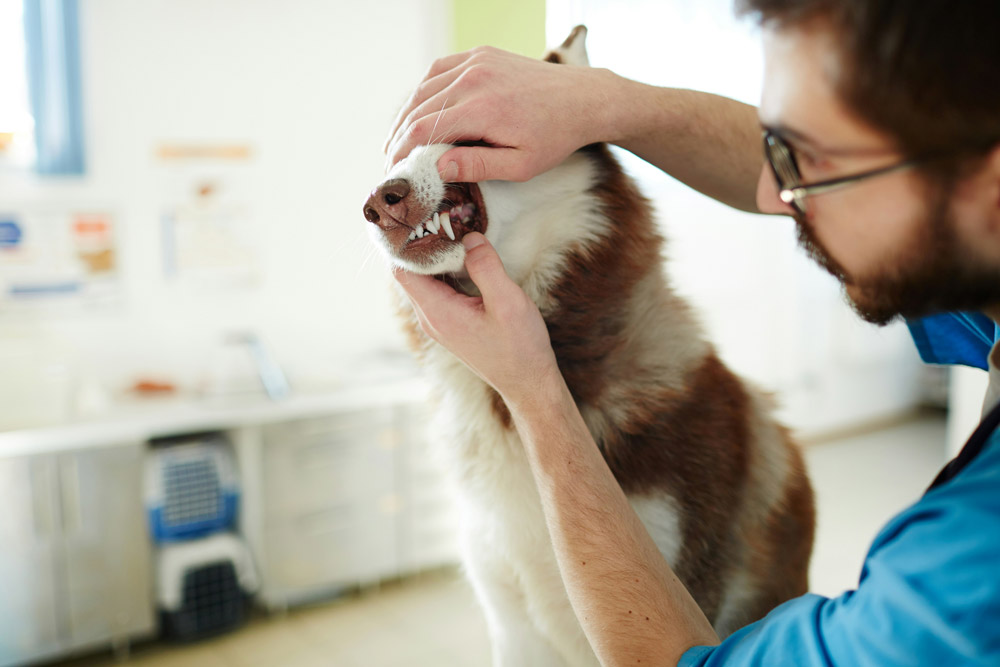
If your dog allows you to look inside their mouth, you may see:
- Plaque and tartar: A hard, yellowish-brown crust covering the teeth.
- Inflamed gums: Healthy gums should be salmon-pink. Red, swollen, or bleeding gums indicate gingivitis.
- Damaged teeth: Wobbly, missing, or fractured (broken) teeth.
- Facial swelling: Lumps or swellings on the face—especially just under the eye—can indicate a tooth root abscess.
Common dental issues in dogs
- Gingivitis: Gingivitis (inflammation of the gums) is an early stage of gum disease caused by bacteria in plaque and tartar releasing toxins that irritate the gums. Gingivitis is painful and causes bad breath. If caught early, gingivitis is usually reversible with professional cleaning and consistent home care.
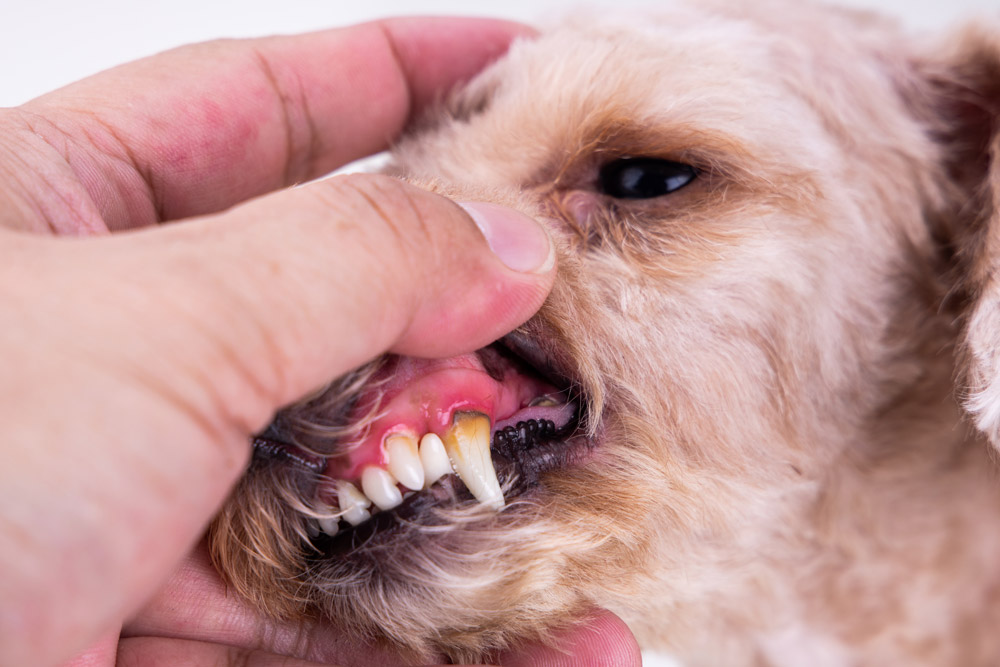
- Periodontitis: A serious dental problem that develops if gingivitis is left untreated. It occurs when inflammation spreads beneath the gums into the ligaments and bone that hold the teeth in place. Periodontitis causes teeth to become loose, painful, and prone to infection. Periodontitis is irreversible, so tooth extraction is usually necessary to eliminate pain and prevent the problem from spreading.
- Tooth Root Abscesses: A pocket of infection (pus) that develops around the root of a tooth, typically around damaged or decaying teeth. They are most common in the upper molars. Symptoms often appear suddenly and include severe pain, bad breath, and a swollen cheek. Tooth root abscesses should be treated as an emergency and assessed by a vet ASAP.
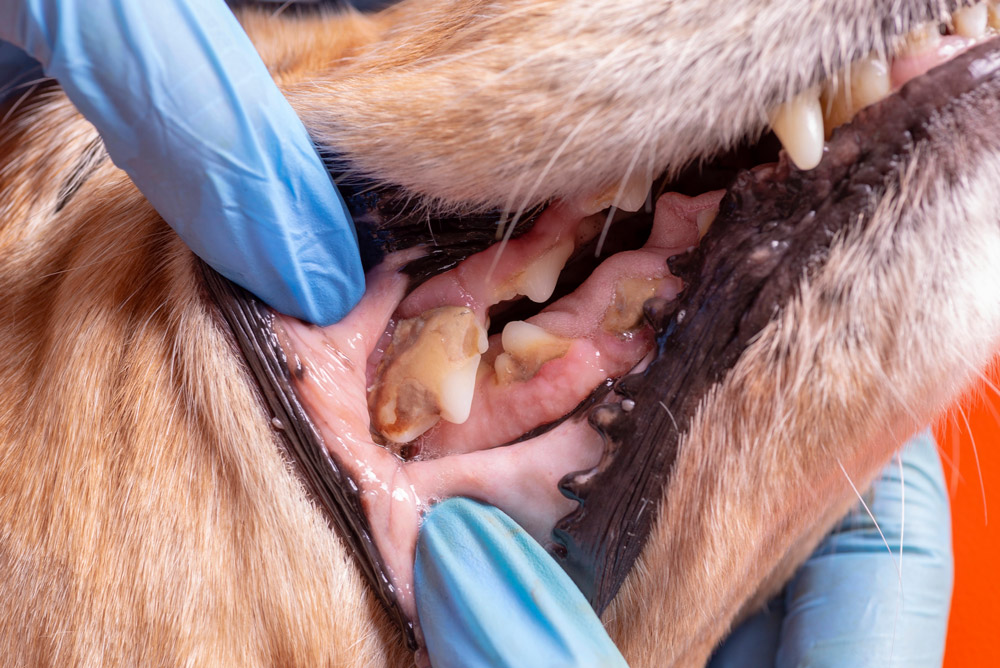
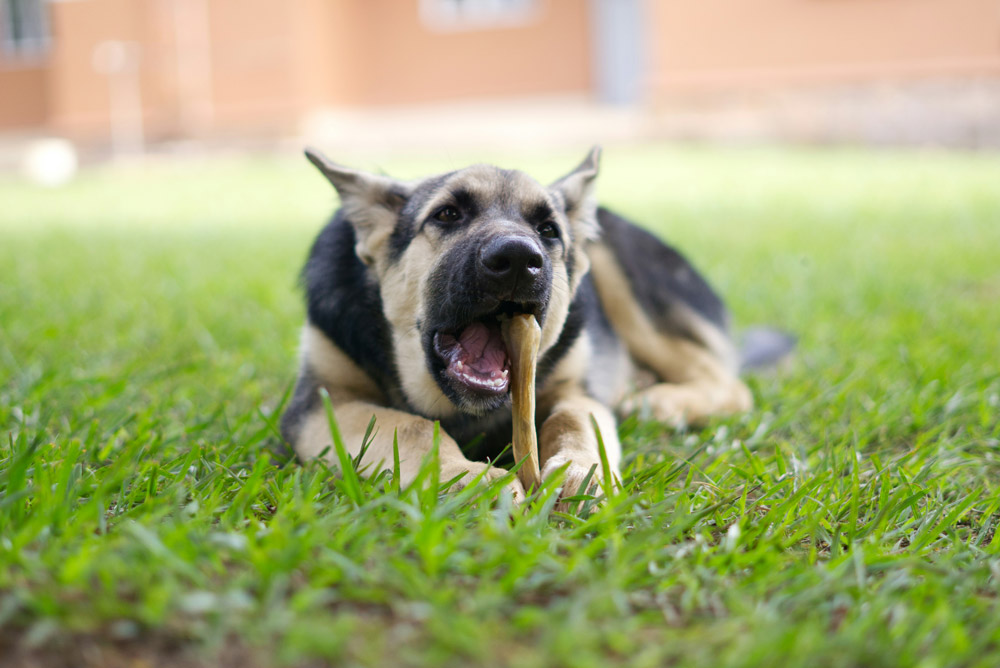
- Tooth Fractures: Broken teeth are usually caused by trauma or chewing on very hard items like antlers, bones, and hooves. These are incredibly painful – especially if the sensitive “pulp” (nerves and blood vessels) is exposed. Even if your dog seems fine, fractured teeth require veterinary attention. Treatment depends on the severity; while some minor chips may only need monitoring, more seriously damaged teeth often require extraction or root canal therapy.
How to Prevent Dental Disease in Dogs
A “multi-modal” approach is the best way to keep your dog’s mouth healthy.
Daily brushing
The single most effective tool. Because plaque turns into tartar within 48 hours, brushing once a day is necessary to make a difference.
- Start early: Get puppies used to mouth handling immediately.
- Adult Dogs: Introduce brushing slowly with plenty of praise.
- Finger Brushes/Wipes: These are great starting points if your dog won’t tolerate a standard brush yet.
Dental chews and diets
- Specially designed products use a “scrubbing” texture or active ingredients to prevent plaque from hardening.
- Look for the VOHC (Veterinary Oral Health Council) seal to ensure the product is scientifically proven to work.
Water additives and gels
- Water Additives: Dog-friendly mouthwash added to their drinking bowl. (Never use human mouthwash).
- Oral Gels/Sprays: Help reduce bacteria without the need for scrubbing.
- Dental Powders: Often made from seaweed, these are sprinkled onto food to help soften tartar over time.
- Look for the VOHC (Veterinary Oral Health Council) seal to ensure the product is scientifically proven to work.
When to Contact Your Vet
Book a dental check immediately if you notice any of the following problems:
- Persistent bad breath.
- Red, inflamed, bleeding, or receding gums.
- Visible yellow or brown “crust” (tartar) on teeth.
- Wobbly or broken teeth.
- Difficulty eating, dropping food, or chewing on one side.
- Facial swelling.
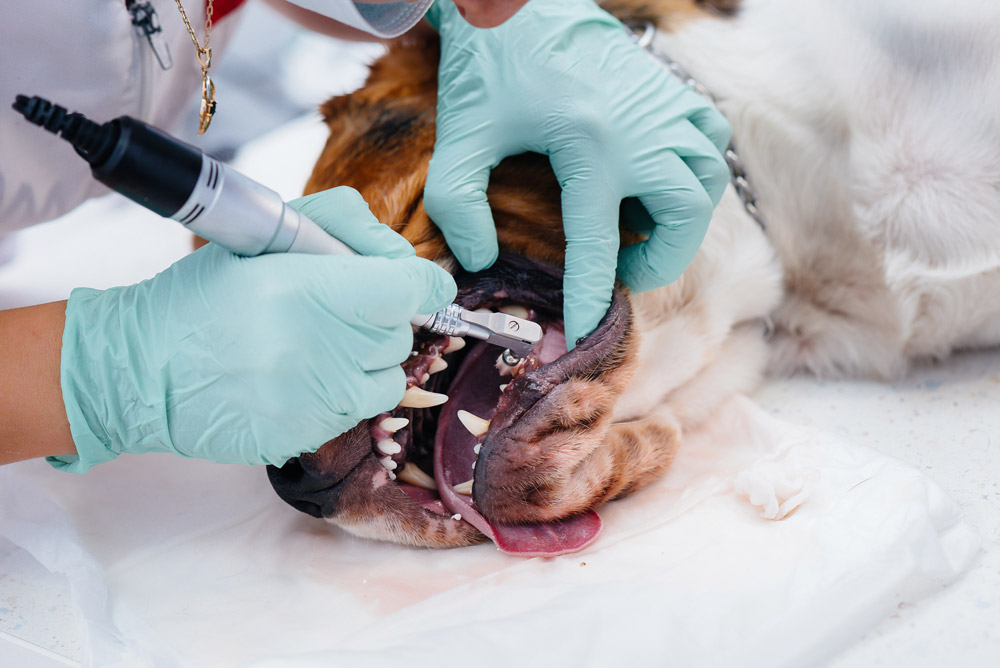
Remember: If your dog already has visible tartar or a sore mouth, brushing alone won’t solve the problem. In fact, brushing a painful mouth can make your dog fearful of the process. They are likely to need a professional veterinary mouth clean to give them a fresh, pain-free start.
You should also have your dog’s teeth routinely checked by a vet at least once a year, a good time for this could be at their annual health check or booster.
Tooth cleaning advice: a step-by-step guide
Most dogs will learn to accept tooth brushing if you take it slowly and some may even enjoy it! The goal is to make brushing a positive experience using reward-based training.
- Introduce a toothpaste: Start by letting your dog lick a small amount of pet-safe toothpaste off your finger. Pet-safe toothpastes often come in chicken or beef flavours that dogs find delicious. Never use human toothpaste, as it contains fluoride and sometimes xylitol which are toxic to dogs.
- Get them used to having their teeth touched: Gently rub your finger or a soft cloth along their gums and teeth. This gets them used to the sensation of something in their mouth. Always reward them with praise or a tiny treat immediately after.
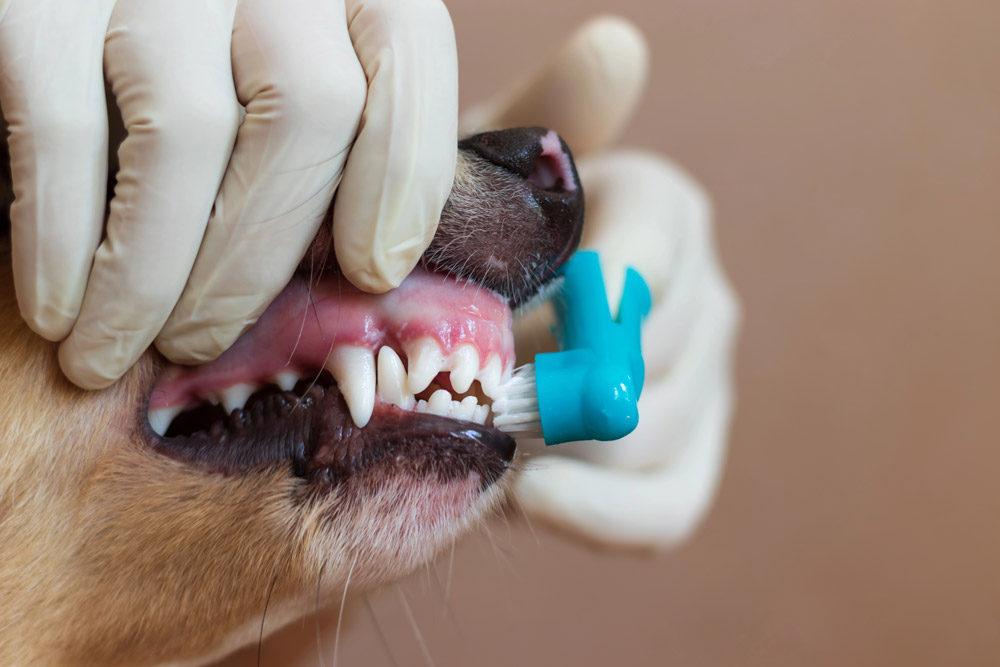
- Introduce a finger brush: Once they are comfortable with your finger, move on to a finger brush (rubber or fabric). This is softer than a standard brush and helps them adjust to the “scrubbing” feeling.
- The main event: When your dog is comfortable with a finger brush, move to a proper dog toothbrush. You don’t need to open their mouth wide; simply lift their lips to reach the outer surfaces of the teeth and the gum line.
- Focus on the Outside: Focus your efforts on the outside of the teeth where plaque builds up most. The tongue naturally helps keep the inside surfaces cleaner.
- Repeat daily: Plaque builds up quickly, so for best results, brush your dog’s teeth once a day.