

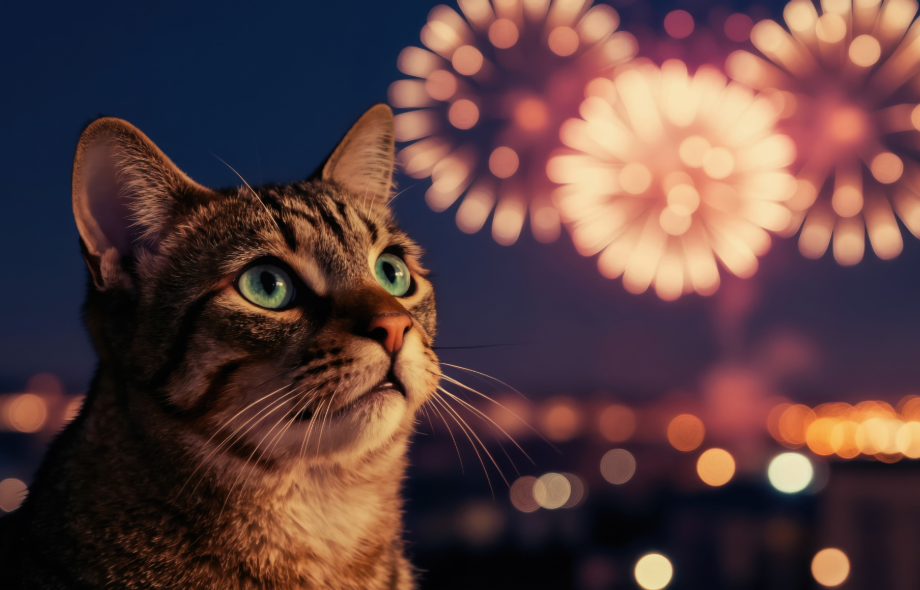
Fireworks can be difficult for cats. Loud, unpredictable bangs, flashes of light and changes to the normal household routine can leave even a usually confident cat feeling unsettled.
The best time to prepare is before firework season is in full swing. Giving a cat suitable places to hide, getting outdoor cats used to coming home earlier and making a few changes around the house can all help when Bonfire Night arrives.
For cats that have struggled badly with fireworks before, preparing early also gives owners time to speak to a vet rather than trying to find a solution once their cat is already frightened.
Why are cats scared of fireworks?
Cats have very sensitive hearing and are naturally alert to sudden changes in their surroundings. A loud noise that appears without warning can therefore trigger a normal fear response.
Fireworks are particularly challenging because they are unpredictable. The bangs vary in volume and direction, flashes can suddenly light up a room, and displays may continue intermittently for hours. A cat has no way of knowing that the noise outside is a celebration rather than a potential threat.
Some cats seem relatively unconcerned, while others become extremely frightened. Previous experiences, personality, age and health can all influence how an individual cat responds.
A cat that suddenly becomes much more sensitive to noise, particularly when there has been no previous problem with fireworks, should be discussed with a vet. Changes in behaviour can sometimes be associated with pain or another underlying health problem.
How can owners tell if a cat is frightened by fireworks?
Fear in cats is not always dramatic.
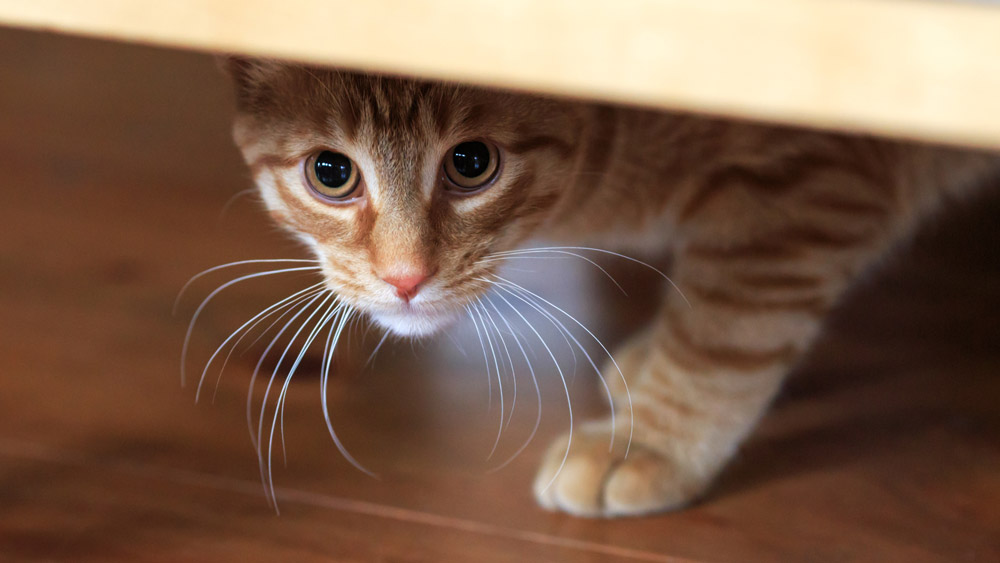
Some cats run from room to room or try to escape, but many respond by becoming quieter and less visible. This can make stress easy to underestimate.
Signs can include:
- Hiding more than usual
- Crouching or making the body appear smaller
- Flattening the ears
- Dilated pupils
- Eating or drinking less
- Becoming unusually alert or watchful
- Pacing or appearing unable to settle
- Toileting somewhere other than the litter tray
- Trying to escape from the house
- Becoming less tolerant of people or other pets
A cat disappearing under the bed for the evening may be coping with something they find frightening rather than simply choosing somewhere comfortable to sleep.
Start preparing before Bonfire Night
Cats generally cope best when changes are introduced gradually.
For an outdoor cat, suddenly realising the cat flap is closed on 5th November may add another source of frustration to an already unusual evening. If a cat is accustomed to being outdoors after dark, owners can start encouraging them home earlier in the weeks leading up to Bonfire Night.
An earlier evening meal can help establish the new routine. Once fireworks become likely, cats should be safely indoors before darkness falls, with doors, windows and cat flaps secured.
Microchip details should also be checked in advance. A frightened cat may behave very differently from normal, so accurate contact information is particularly important if a cat manages to escape.
Give cats somewhere safe to hide
Hiding is an important coping strategy for cats.
A frightened cat may choose somewhere under a bed, behind furniture, inside a wardrobe or on top of a cupboard. Some cats prefer to get underneath something, while others feel safer when they can retreat somewhere high.
Owners can provide additional options before firework season starts. An open cardboard box placed on its side, a covered cat bed or a quiet shelf with comfortable bedding may all be useful.
The important part is choice.
A cat should be able to enter and leave a hiding place freely. They should not be put into a den, shut inside it or pulled out because an owner would prefer them to sit somewhere else. If a cat chooses a different safe place from the one that has been carefully prepared, that is fine too.
Don’t coax a frightened cat out of hiding
It can be tempting to check repeatedly on a cat that has disappeared behind the sofa, particularly when the noise outside is loud.
If the hiding place is safe, however, it is usually better to let the cat remain there.
Pulling a frightened cat out, repeatedly reaching towards them or trying to hold them can remove the control they are trying to regain by hiding. It may also increase the risk of a frightened cat scratching or biting.
Owners can stay nearby and behave normally. If the cat chooses to approach and seek attention, gentle contact is fine. If the cat prefers to stay hidden, that choice should be respected.
Make sure everything a cat needs is available indoors
Cats that usually toilet outside will still need access to a litter tray when they are being kept in. Introduce a litter tray to the house a few weeks before fireworks so they have time to get used to it.
This is particularly important during firework season because opening a door to let a cat out for a quick toilet break could be enough for a frightened cat to bolt.
Food, fresh water, comfortable resting areas and scratching opportunities should also remain easily accessible.
In a multi-cat household, resources should be spread around the home so that one nervous cat does not have to pass another cat to reach them. For litter trays, a commonly recommended starting point is one tray per cat plus one extra, positioned in separate locations rather than all together.
A litter tray should ideally be placed somewhere quiet and accessible. Putting the only tray beside a noisy washing machine or in an exposed hallway is unlikely to make it appealing to a frightened cat.
Reduce the noise and flashes from outside
Before fireworks begin, curtains or blinds can be closed and indoor lights switched on to make sudden flashes outside less noticeable.
Familiar background sound can also help soften the contrast between a quiet house and a sudden explosion outside. Television, radio or music can be used, provided the volume itself is comfortable for the cat.
It is better for this sound to be familiar. Turning on loud music for the first time because fireworks have started may simply replace one unusual noise with another.
Can cats be taught not to fear firework sounds?
Some cats can become more comfortable with recorded firework sounds when they are introduced extremely gradually.
This is known as desensitisation. The recording starts at such a low volume that the cat remains relaxed. Only when the cat is completely comfortable is the volume increased slightly.
The cat’s reaction should determine the pace.
Subtle responses matter. Turning the ears towards the speaker, suddenly becoming still, enlarging pupils, leaving the room or stopping an enjoyable activity can all suggest that the sound is already too much.
If a cat reacts, the volume should be reduced or the session stopped. Playing loud firework recordings in an attempt to make a frightened cat ‘get used to it’ can increase fear rather than reduce it. This kind of training can take a few weeks or months depending on the cat, so start early, don’t rush it, and only progress once your cat feels comfortable.
Cats with established or severe noise fears may benefit from individual advice from a suitably qualified behaviour professional.
Do pheromone diffusers help cats during fireworks?
Synthetic cat pheromone products are often used as part of a wider plan to help cats feel more secure in their environment.
They are not a substitute for providing hiding places, reducing exposure to fireworks or seeking veterinary help where fear is severe. Individual cats may also respond differently.
If you decide to add a pheromone diffuser to your plan, start before firework season rather than plugging one in after a cat has already become distressed.
What should happen when the fireworks start?
Once fireworks are underway, the priority is to help the cat feel secure rather than trying to train them.
Doors, windows and cat flaps should remain closed. Curtains can stay drawn and familiar background noise can be used to reduce the impact of sounds from outside.
The cat should be allowed to decide where to spend the evening.
A relaxed cat may still be interested in food, play or attention. These can be offered without being forced. A frightened cat that wants to hide should be allowed to do so.
Normal household behaviour can also be reassuring. There is no need for everyone to whisper or repeatedly check on the cat. Keeping the environment calm and predictable is usually more helpful.
Should a frightened cat be comforted?
If a cat seeks reassurance, owners do not need to ignore them.
A cat that approaches a trusted person may appreciate quiet company or gentle affection. Another cat may want no physical contact at all.
Neither response is wrong.
The key is allowing cats to choose. Picking up or restraining a frightened cat when they’re trying to leave can make them feel trapped, so offer comfort to cats that approach for reassurance, but allow those that want to be alone to have space.
Cats should never be punished for behaviour caused by fear. Hiding, vocalising, toileting outside the litter tray or behaving defensively may all happen when a cat is distressed.
What about households with more than one cat?
Firework stress can affect relationships between cats as well as their response to people.
A frightened cat may become more irritable or less tolerant of another cat approaching. Cats that normally share a room comfortably may therefore choose to keep further apart.
Providing plenty of separate hiding places, beds, water bowls and litter trays gives each cat the opportunity to find somewhere that feels safe without competing for resources.
There is no need to encourage cats to comfort one another or remain together. Allowing each cat to choose where they settle is usually the better approach.
When should a vet become involved?
Veterinary advice is sensible before Bonfire Night if a cat has previously shown severe or prolonged fear during fireworks.
This is particularly important if the cat:
- Tries frantically to escape
- Stops eating
- Remains distressed for a long period after the fireworks have ended
- Injures themselves while trying to hide or escape
- Becomes unusually aggressive or defensive
- Has developed a new or much stronger response to noise
- Has a change to their urinary habits. This is often observed in cats under stress, and can become an emergency for male cats
A vet can assess whether a health problem could be contributing and discuss whether additional support is appropriate.
For some cats with significant fear, medication may form part of an individual plan. This needs to be discussed with a vet in advance rather than waiting until the cat is already extremely distressed.
Human medicines, medication prescribed for another animal and leftover veterinary medication should never be given without veterinary advice.
How long can cats be affected after fireworks?
Not every cat returns to normal as soon as the final firework stops.
Some may remain cautious or hidden for a while afterwards. Owners can leave the environment calm, keep resources easily accessible and allow the cat to emerge in their own time.
Normal routines can then resume gradually.
If a cat remains withdrawn, continues eating significantly less, develops toileting problems or seems unwell after the event, veterinary advice should be sought rather than assuming that stress is the only possible cause.
A little preparation can make firework season easier
Cats cannot understand why the sky suddenly becomes noisy on Bonfire Night, but owners can make their home feel safer and more predictable.
Preparing hiding places, encouraging outdoor cats home before dark, providing plenty of indoor resources and allowing each cat to choose how they cope can all make a difference.
Most importantly, significant fear should not simply be accepted as something a cat has to endure every autumn.