

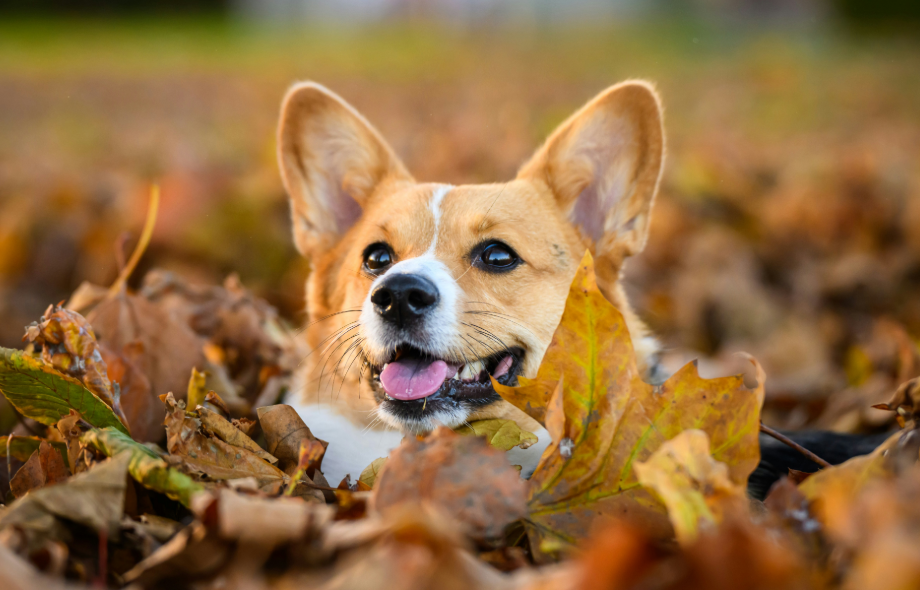
Crunchy leaves, cooler temperatures and long woodland walks can make autumn one of the nicest times of year to be out with your dog. It is also the season when a few things start appearing on the ground that are worth keeping an eye on.
Conkers, acorns and wild mushrooms are common finds on autumn walks, particularly in parks and woodland. Add wetter weather, muddy paths and tempting puddles into the mix, and there are a few extra reasons to pay attention to what your dog is sniffing, licking or picking up.
There is no need to avoid autumn walks. Most dogs will explore these things without coming to any harm. Knowing when something is best taken away, and when you should call a vet, can make all the difference.
Conkers: more than just a tempting ball
Conkers are the seeds of the horse chestnut tree and they can be particularly appealing to dogs who like carrying or chewing things.
They contain a substance called aesculin, which can make dogs unwell if eaten. Signs can include vomiting, diarrhoea, drooling, abdominal discomfort and a reduced appetite. Conkers also bring another problem: they are large, firm and difficult to digest. A swallowed conker, or a large piece of one, can become lodged in the stomach or intestines and cause a blockage.
If your dog picks one up, swapping it calmly for a treat or toy is much better than turning it into an exciting game of chase.
If you think your dog has actually swallowed a conker, contact your vet for advice. The level of risk depends on factors such as the size of your dog, how much they have eaten and whether it was swallowed whole.
Do not try to make your dog sick at home unless specifically instructed to do so by a veterinary professional.
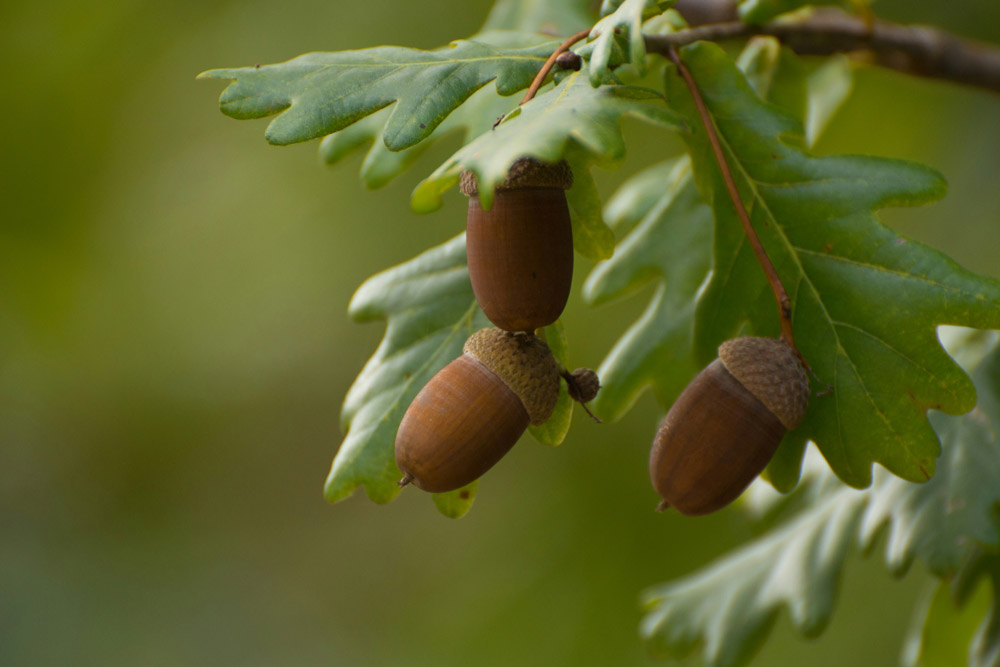
Acorns can cause problems too
Acorns are another autumn favourite that some dogs seem determined to crunch their way through.
They contain tannins, which can irritate the digestive system. Eating acorns may cause vomiting, diarrhoea and abdominal discomfort. Green, unripe acorns contain higher levels of tannins than mature brown ones. Larger quantities or repeated ingestion can cause more serious problems, and whole acorns can also become a choking hazard or cause a blockage in the digestive tract.
A dog who has chewed one acorn and seems completely well may not necessarily need treatment, but it is still sensible to ask for veterinary advice if you know they have eaten one. This is particularly important for smaller dogs, dogs that have swallowed several, or if you notice vomiting, diarrhoea, abdominal pain, lethargy or a change in appetite.
For dogs who constantly hoover things from the ground, practising a strong “leave” or “drop” cue can be particularly useful at this time of year. In dogs who are persistent scavengers, it may also be worth talking to a suitably qualified trainer or vet about whether a well-fitted basket muzzle could make walks safer.
Mushrooms: don’t wait to see what happens
Autumn’s damp, mild weather provides perfect conditions for wild mushrooms and toadstools, and these deserve a little more caution.
There are thousands of species of fungi and telling them apart can be extremely difficult. Some cause little more than an upset stomach, while others can affect the nervous system or cause serious liver or kidney damage. With some poisonous fungi, symptoms may not appear immediately.
That is why a dog eating an unidentified wild mushroom should not be treated as a “wait and see” situation.
Contact your vet straight away, even if your dog looks completely normal.
If you can do so safely, take several clear photographs of the mushroom. Include the top, the underside and a wider photograph showing where it was growing. If some of the mushroom is left, a sample may also help with identification. Handle unknown fungi carefully, wash your hands afterwards and keep the sample away from children and pets. Animal PoisonLine recommends taking photographs that show both the mushroom and its growing environment because these details can help with identification.
Try to remember roughly when your dog ate it and how much may have been swallowed. Those details can be useful when deciding what treatment is needed.
What about muddy walks?
Mud itself is usually more of a laundry problem than a veterinary emergency, but wet autumn walks do bring a few health considerations.
One is leptospirosis, a potentially serious bacterial infection that can damage the liver and kidneys. The bacteria are spread in the urine of infected animals and can survive in water and soil. Dogs can be exposed through contaminated puddles, ponds, slow-moving water and wet ground, particularly where rats or other wildlife are present. Keeping your dog’s leptospirosis vaccination up to date is an important part of protecting them.
This does not mean your dog can never splash through a puddle again, but it is best to discourage them from drinking from stagnant or slow-moving water, particularly in areas with lots of wildlife or rodents.
There is also a much rarer condition associated with wet, muddy environments called Alabama rot, or cutaneous and renal glomerular vasculopathy.
The cause of Alabama rot is still unknown, so it is important not to create unnecessary worry around every muddy walk. It is very rare. However, cases have been associated with dogs walking in wet and muddy woodland, particularly during the colder months. The condition affects blood vessels in the skin and kidneys. Early signs can include unexplained sores, ulcers or reddened areas, often around the paws or lower legs.
There is no guaranteed way to prevent Alabama rot. Current advice includes washing and thoroughly drying muddy dogs after walks and keeping an eye on their skin afterwards. If you find an unexplained sore or ulcer, particularly if your dog also becomes lethargic, goes off their food, vomits or shows changes in drinking or urination, contact your vet promptly.
A post-walk rinse also gives you a useful opportunity to check paws and legs properly. Look between the toes as well as over the pads, especially after woodland walks where small injuries can easily go unnoticed under a layer of mud.
If your dog eats something on a walk
Dogs are quick. Sometimes you see them chewing something and have absolutely no idea what it was.
If you know, or strongly suspect, that your dog has eaten a conker, acorn, wild mushroom or another potentially harmful plant, getting advice early is much better than waiting for symptoms to develop.
If possible, make a note of what was eaten, approximately how much, when it happened and whether your dog is showing any signs of being unwell. A photograph of a plant or mushroom can also be useful.
Do not give salt water, hydrogen peroxide or other home remedies to make your dog vomit. Trying to induce vomiting yourself can cause further problems.
If your dog is repeatedly vomiting, seems very sleepy or weak, is struggling to breathe, collapses, has tremors or seizures, appears to be in significant pain, or you are worried they may have swallowed an unknown mushroom, seek veterinary help urgently.
Enjoy autumn, just keep one eye on the ground
Autumn walks do not need to become an obstacle course of things to worry about. For most dogs, the biggest challenge will still be getting them home without coating the car in mud.
A little awareness goes a long way. Keep an eye on enthusiastic scavengers around acorns and conkers, treat unknown mushrooms seriously, discourage drinking from stagnant water and give muddy paws and legs a quick check when you get home.
And if your dog has eaten something and you are unsure whether it matters, ask. It is much easier to assess a possible problem early than to try to work out what happened once a dog has become unwell.
If you have access to PawSquad, you can speak to a vet through the app 24/7 if you have a question about something your dog has picked up on a walk, or you are not sure whether the signs you are seeing need further attention.