
Ticks are a common problem in the UK, especially for dogs who love exploring outdoors, but they can also be a problem for cats who live in rural areas. As well as causing discomfort, up to 10% of UK ticks carry and spread certain diseases such as Lyme disease and Babesiosis. However, fortunately most tick bites are easily managed through quick identification and removal. In this guide, we discuss how to check for ticks, how to remove them, and how to create a prevention plan tailored to your dog or cats’ specific lifestyle.
How Do Pets Catch Ticks?
PetsCat or Dog tend to pick up ticks when they are out exploring. Particularly in high-risk areas such as woodlands, moorland, long grass, rough grazing, and wildlife hotspots (deer, sheep, and hedgehog).
Ticks don’t fly or jump. Instead, they wait on vegetation like long grass or shrubs with their front legs extended, ready to latch onto animals and humans if they brush past. They are most active in the warmer months (spring – autumn), but remain active whenever temperatures stay above 4°C to 7°C.
Identifying a Tick on Your Cat or Dog
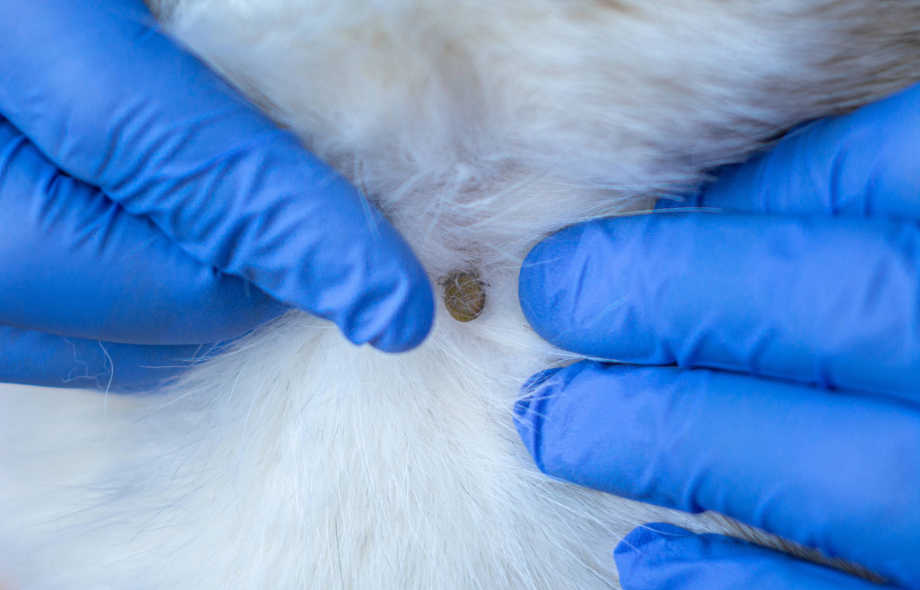
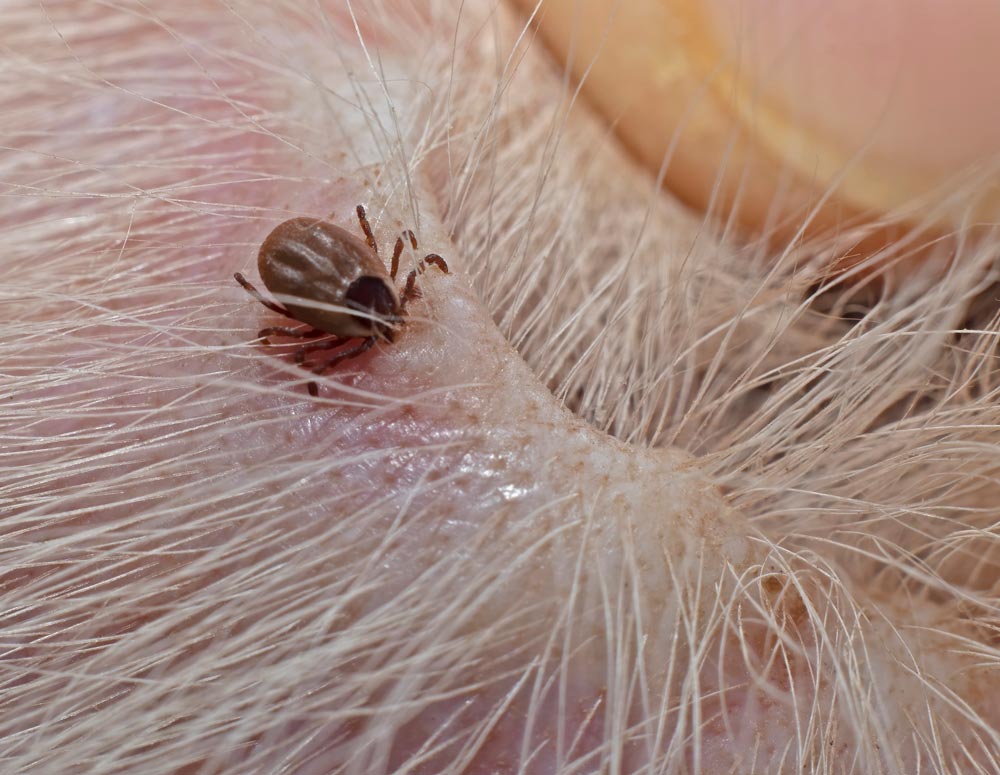
Ticks range from 1mm to 10mm, depending on their life stage and whether they have fed. They can be difficult to detect in dense fur and are often mistaken for small warts or skin growths.
- Young Nymph Ticks: These are tiny – roughly the size of a poppy seed. They are easily overlooked but just as capable of transmitting disease as adult ticks.
- Adult Ticks: Before feeding, adult ticks have flat, oval bodies and are typically dark brown, grey, or reddish in colour. Once they’ve attached and started feeding, they quickly become large and round, turn a light grey colour, and resemble a small bean or pebble.
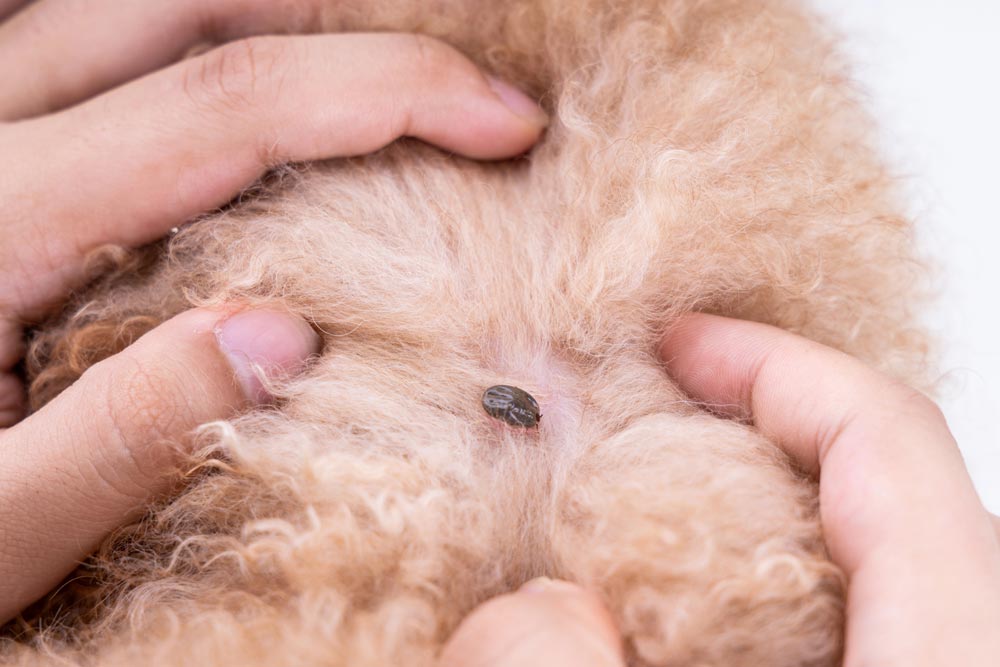
We recommend checking your pet for ticks very regularly, and after every dog walk in a high-risk area.
- Manual Inspection: Run your hands over their entire body.
- Part the Fur: Methodically part the fur, especially in thick-coated breeds, to ensure you have a clear view of the skin.
- Focus on High-Risk Areas: Pay close attention to the areas ticks are frequently found:
- Inside and around the ears.
- Around the neck and under the collar.
- The tummy and groin area.
- The legs, feet, and between the toes.
How to Safely Remove a Tick
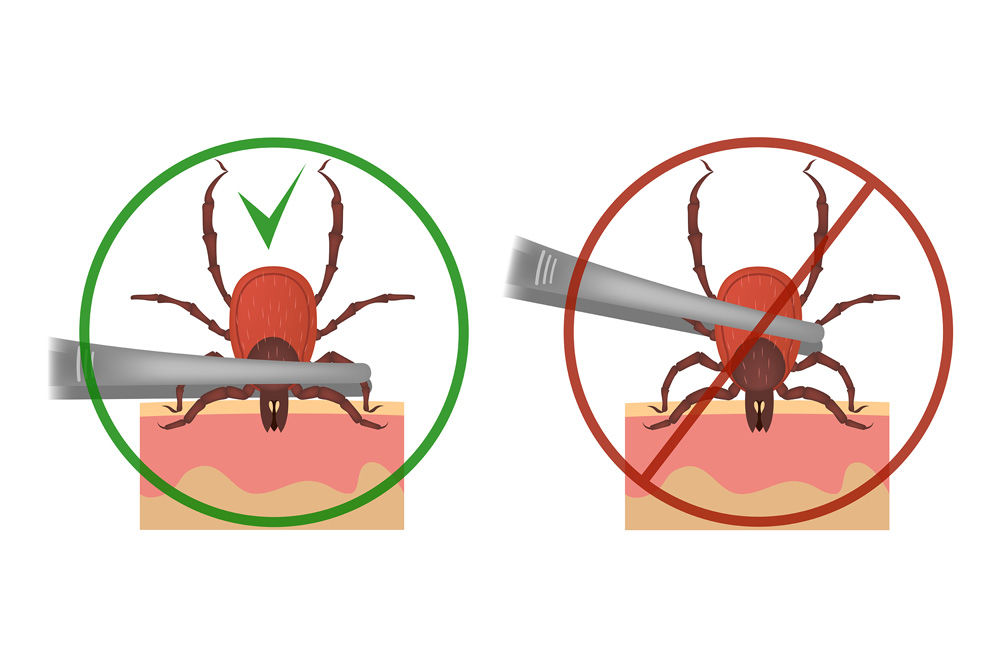
If you find a tick, it should be removed ASAP. Never squeeze, burn, or apply substances like alcohol to the tick. These methods can cause the tick to regurgitate its stomach contents into your dog, significantly increasing the risk of infection or transmission of diseases such as Lyme disease.
There are two different methods of tick removal. One applies to a tick removing tool, and one applies to tweezers. Pick the method that suits your tools!
The Tick Removal Tool Twister Method:
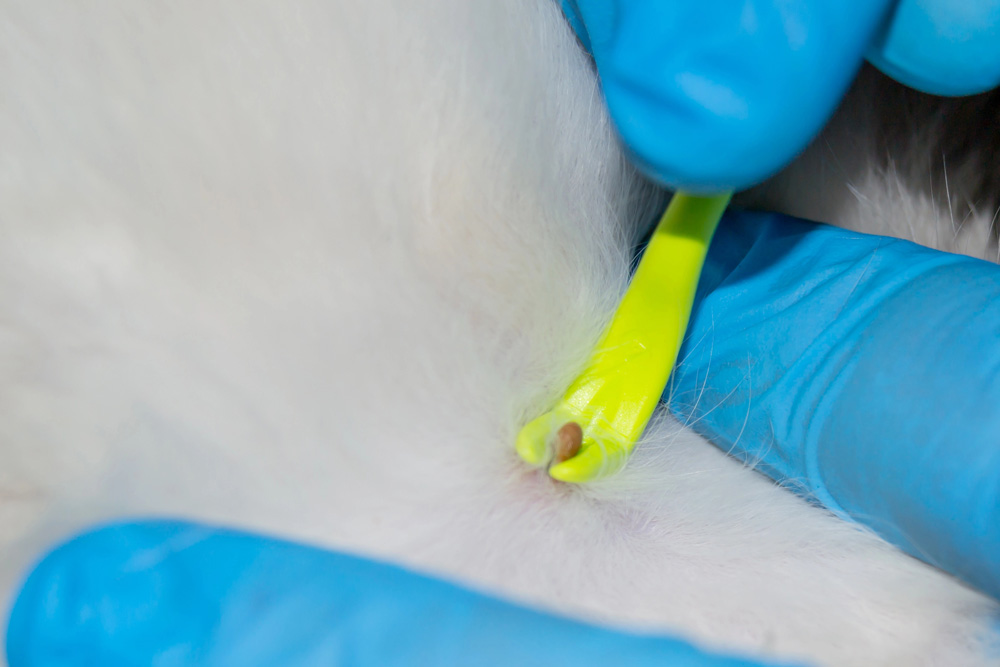
The safest way to remove a tick is by using a specific tick remover tool.
- Slide and Hook: Carefully slide the hook of the tool under the tick’s body, as close to your dog’s skin as possible.
- Twist: Gently rotate the tool in one direction. Do not pull upwards. The tick will typically release its grip after 2-3 full turns.
Clean: Once removed, ensure you have removed the whole tick (including its head), and dispose of it. Disinfect the bite site and the removal tool with a pet-safe antiseptic.
The Tweezers Pull Method:
- Hold the tick firmly: Carefully grasp the tick as close to the pet’s body as possible, making sure not to squeeze so hard you cut through the tick.
- Pull up and away: Gently pull the tick up and away from the pet.
- Clean: Once removed, ensure you have removed the whole tick (including its head), and dispose of it. Disinfect the bite site and the removal tool with a pet-safe antiseptic.
Understanding the Risks: Tick-Borne Diseases
Some ticks in the UK carry diseases that they can pass on when they attach and feed. While the overall risk of your pet becoming unwell from a single bite is low, it’s important to know the signs, as vet treatment is vital for a full recovery.
Common UK Diseases
The two diseases we see most often in the UK are Lyme disease and Babesiosis. Both are serious and need veterinary attention.
- Lyme Disease: A bacterial infection that can cause long-term health problems if it isn’t treated.
- Babesiosis: A parasite that attacks red blood cells. While it’s less common than Lyme disease, it is an emerging concern in certain parts of the UK.
Monitoring Your Pet After a Bite
Unlike humans, pets don’t usually get a “bullseye” rash around the bite. Instead, you need to watch their general health and behaviour.
For several weeks after you find a tick, keep a close eye on your pet for any of these signs:
- Lethargy or unusual tiredness.
- Reduced appetite or weight loss.
- Stiffness or a “shifting” lameness (where they seem sore on different legs at different times).
- Swollen or painful joints.
- Fever or a general sense of being “off-colour.”
If you notice any of these symptoms, contact your vet immediately and mention that your pet was recently bitten by a tick.
Travelling Abroad with Dogs: New Risks
If you are planning to take your dog outside of the UK, their risk profile changes significantly. Other countries have a variety of tick species that carry a different range of diseases to those currently seen in the UK.
- Before You Go: Speak to your vet well in advance of travel. They will recommend specific parasiticides that protect against foreign tick species.
- While Away: Be even more rigorous with your daily tick checks.
- Returning Home: Check your dog thoroughly before you re-enter the UK.
Proper protection while travelling is not just about your dog’s health; it also helps prevent new diseases entering the UK tick population.

Preventing ticks
The best way to protect your pet from ticks is to stop them from attaching in the first place, and to quickly remove any that do manage to latch on.
When considering exactly how to protect your pet, it’s important to look at their individual lifestyle. For many years, the standard advice was “blanket treatment” – applying parasite prevention every month regardless of circumstances. However, due to a growing concern regarding the rapid drop in insect numbers worldwide, the veterinary community is moving toward a more modern “risk-based” approach.
Tailoring Protection to Your Pet
- Know Your Risk: How regularly is your cat or dog exposed to ticks? A dog that primarily walks on paved city streets or a cat that lives in an urban area has a vastly different risk profile than any that explore woodland shared with wildlife. If they are rarely in high-risk environments, regular treatment may not be necessary. However, if your companion is regularly exposed to ticks, year-round protection is highly recommended. Talk to your vet about your pet’s specific needs.
- The After-Walk Check: No preventative treatments are 100% effective, so it is vital to check your dog after every walk in a high-risk area.
- Use Parasiticides and Repellents: There are many effective veterinary-grade treatments available, including spot-ons, tablets, and collars. Some products repel ticks to prevent them from biting, while others kill the tick shortly after it attaches. Speak to your vet about which product is most suitable for your pet and the best schedule for their lifestyle.
When Regular Treatment is Essential
While a flexible approach works for many, regular, year-round prevention remains a “must” for certain cats and dogs:
- High-Risk Environments: Dogs or cats regularly in contact with livestock or exploring high-risk areas should stay on a year-round schedule to ensure they remain protected.
- Travel: If you are taking your dog to an area known for high tick populations or traveling abroad, proper prevention is vital.